
Alexandria Attractions — the Egyptian city without pharaohs
Alexander founded it in 331 BC and it never became pharaonic. What you visit here is Greek, Roman, Mamluk and Khedival — a Mediterranean port that happens to be in Egypt, three hours up the road from Cairo.
Alexandria, era by era
There are no temples and no tombs of pharaohs in Alexandria. The city was Greek for three centuries, Roman for four more, and Ottoman and Khedival after that — so its monuments come in layers rather than one period. Knowing that before you arrive is the difference between a great day and a disappointing one.
Greek & Roman Alexandria
For a thousand years this was the intellectual capital of the Mediterranean — Greek-speaking, Roman-ruled, and only sometimes Egyptian. What survives is underground or standing alone in a field.
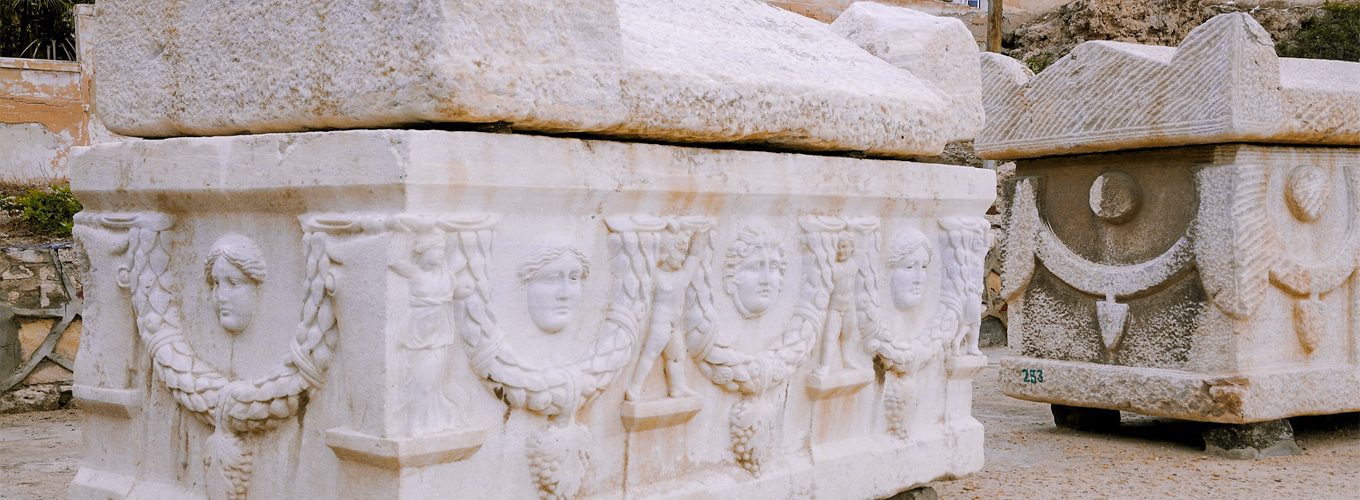 2nd century AD
Catacombs of Kom El Shoqafa
Three storeys of Roman tombs spiralling down into the rock, decorated in a style that is Egyptian, Greek and Roman all at once — Anubis in a Roman soldier's armour. Rediscovered in 1900 when a donkey fell through the roof.
Read the guide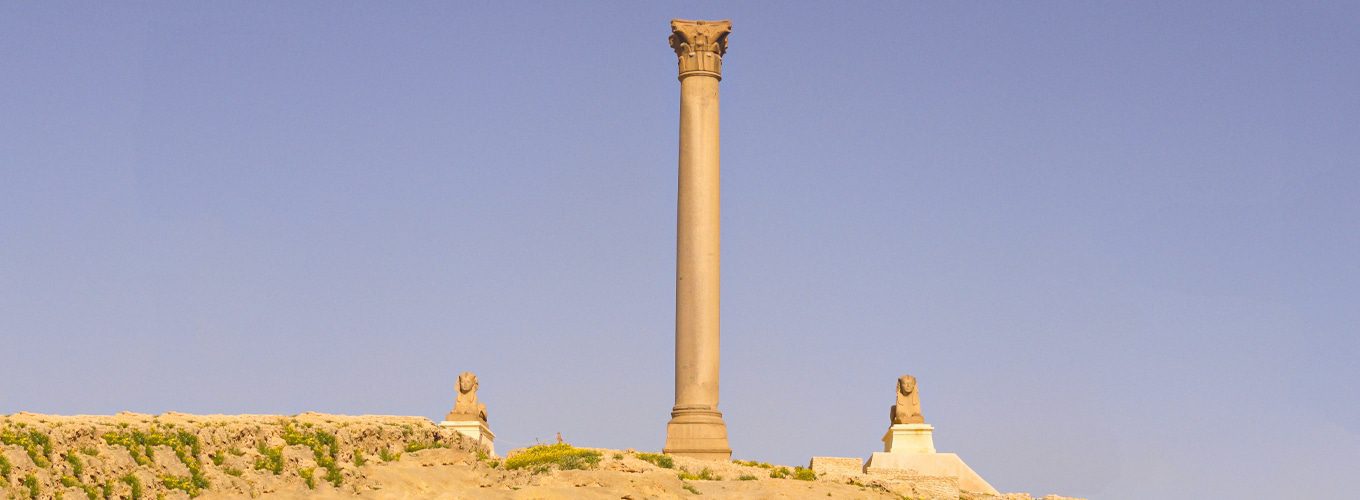 297 AD
Pompey's Pillar
A single 25-metre column of Aswan granite, raised for the emperor Diocletian and nothing to do with Pompey at all — Crusaders misnamed it and the name stuck. It stands on the ruins of the Serapeum.
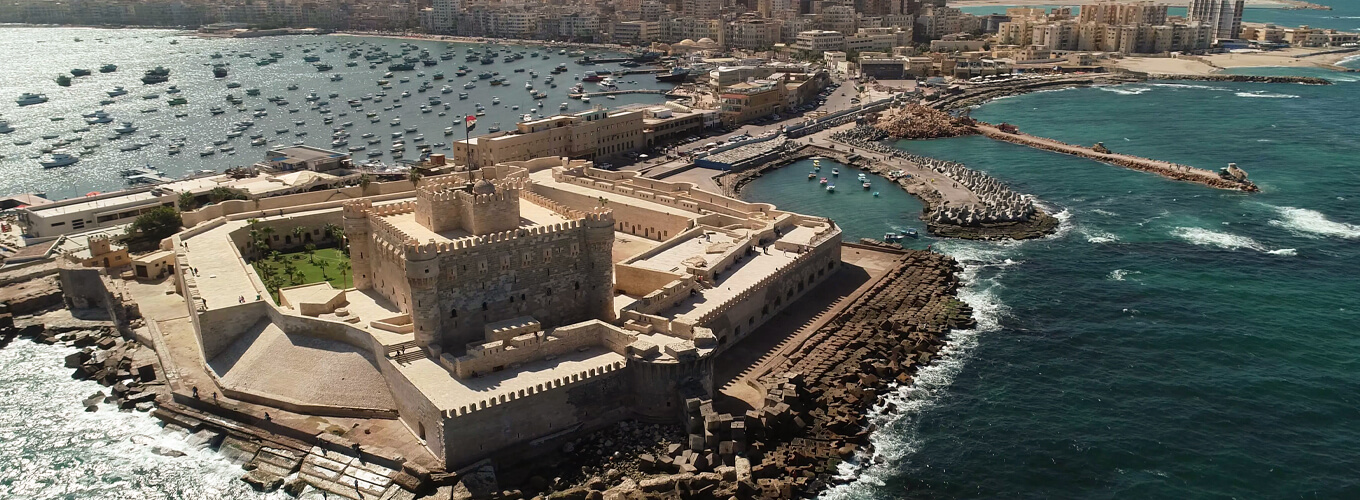
Read the guideThe fort on the lighthouse
Alexandria's most visited monument, and the one most people misunderstand — it is a Mamluk fort standing on the exact spot, and partly on the stones, of one of the Seven Wonders of the Ancient World.
Modern Alexandria
The Khedival city and its twenty-first-century successor. Neither is ancient, and both are among the best things to do here.
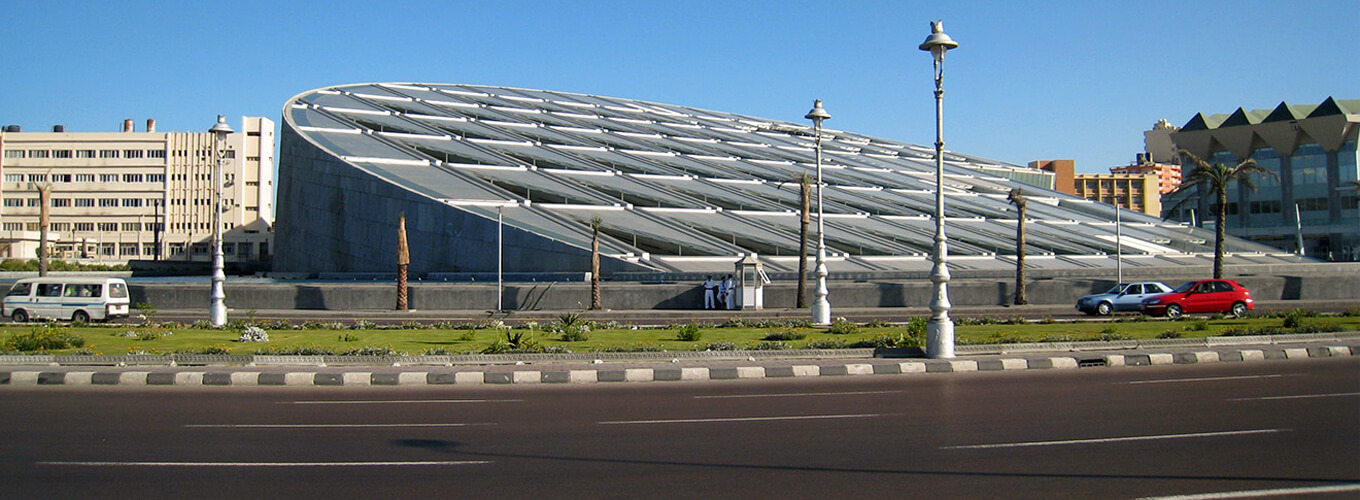 Opened 2002
Bibliotheca Alexandrina
A deliberate echo of the ancient library, built as a vast tilted disc facing the sea. The main reading room is eleven cascading levels under one glass roof, and there are four museums inside.
Read the guide From 1892
Montazah Palace & Gardens
The royal summer residence at the far eastern end of the corniche, in gardens running down to private coves. The palace interiors are closed, but the grounds and the sea front are the point.
Read the guideThe Lighthouse of Alexandria, and what stands there now
The Pharos was one of the Seven Wonders of the Ancient World. It is gone — but the Citadel of Qaitbay sits on its exact foundations, built partly from its fallen stone.
On the island of Pharos, connected to the mainland by a causeway. It gave every European language its word for lighthouse — phare, faro, farol.
For most of 1,600 years only the Great Pyramid stood taller. A fire burned at the top and a mirror threw the light out to sea.
The first cracked it, the last two collapsed what remained. By the 1400s it was a heap of stone on the harbour spit.
The Sultan used the fallen blocks to raise a fort on the exact site — which is why standing in the citadel is as close as anyone gets to the Pharos today.
How Alexandria fits into your trip
One day covers the monuments. The question is whether you drive up from Cairo and back, or build it into a longer itinerary.
From Cairo and back
Three hours each way on the desert road, four or five hours on the ground. Enough for the catacombs, Pompey's Pillar, the Bibliotheca and Qaitbay in the late afternoon — which is the whole standard circuit. A long day, and the way most travellers do it.
One night on the corniche
The same circuit without the rush, plus a seafood dinner in the harbour and a morning walk along the corniche. Alexandria is a Mediterranean city with a completely different feel from Cairo, and one night is enough to notice.
Part of a longer Egypt trip
On our 9, 10 and 14-day itineraries Alexandria comes as a full day between Cairo and the Nile cruise, with the driving already handled. If Alexandria matters to you, this is the version that does not cost you a day of Egypt.
Tours that include Alexandria
Prices per person, twin share, with transport, entry fees, a private Egyptologist and transfers included.

Cairo · Alexandria
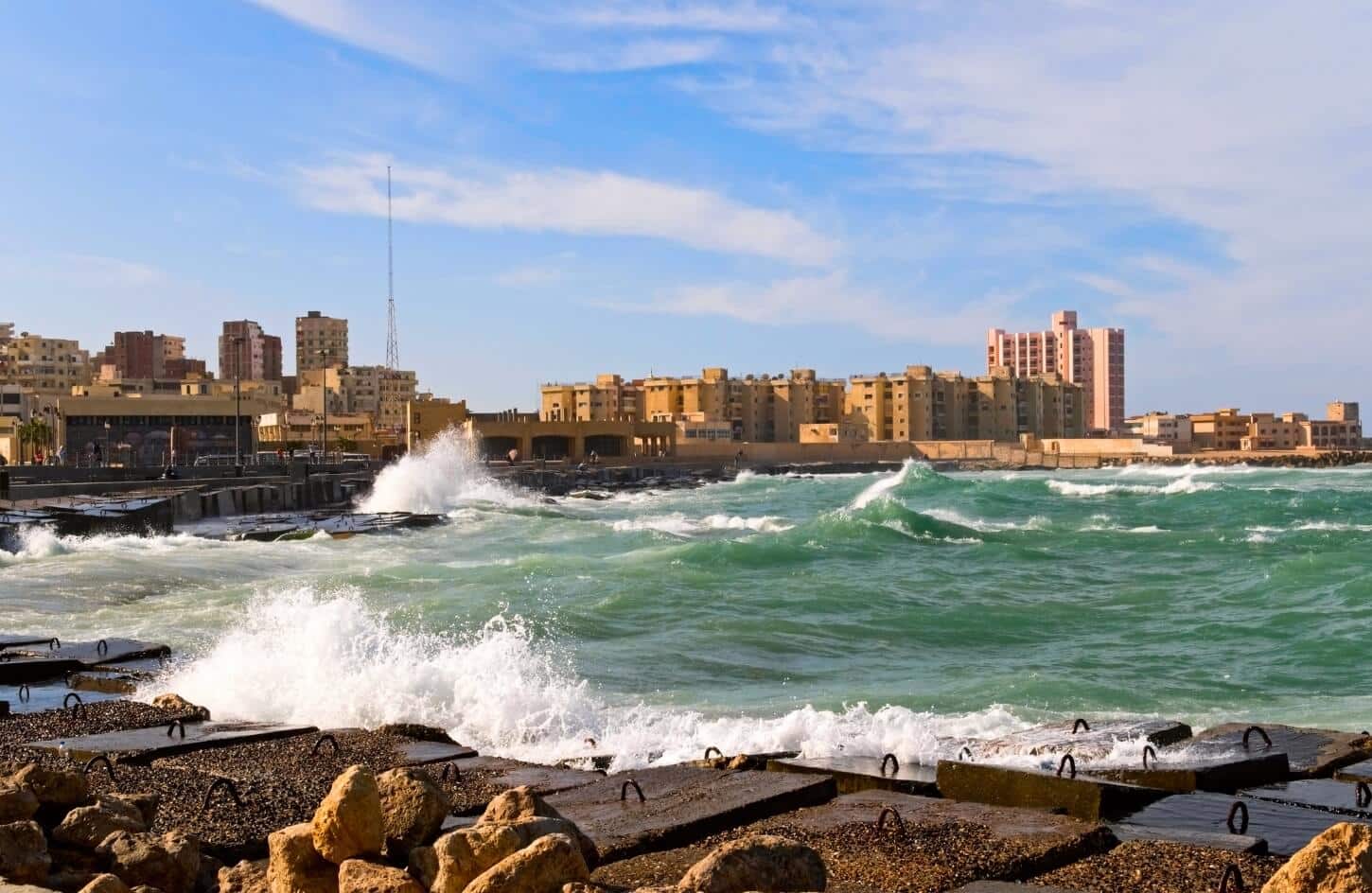
Over Day Tour to Alexandria from Cairo
5.0 5 reviews
- Catacombs of Kom el Shoqafa
- Qaitbay Citadel & Pompey's Pillar
- Corniche drive + lunch included
Cairo · Alexandria
Overnight Trip to Alexandria from Cairo
5.0 5 reviews
- Catacombs, Pompey's Pillar & Qaitbay
- Bibliotheca Alexandrina + jewelry museum
- 1 night in Alexandria + 2 lunches

Cairo · Aswan · Luxor · Alexandria
9 Day Cairo, Nile Cruise and Alexandria
5.0 18 reviews
- Pyramids + Egyptian Museum in Cairo
- 3-night 5★ Nile cruise Aswan → Luxor
- Alexandria day trip + domestic flights

Cairo · Alexandria · Nile
10 Day Cairo, Alexandria and Cruise with Abu Simbel
5.0 20 reviews
- Mediterranean day in Alexandria
- 4-night Nile cruise + Abu Simbel
- All flights, hotels & guides included

Cairo · Nile · Hurghada · Alexandria
14 Day Cairo, Alexandria, Cruise and Hurghada
5.0 16 reviews
- 3-night Nile cruise Aswan → Luxor
- 4 nights on the Red Sea in Hurghada
- Alexandria day trip + Old Cairo
Cairo · Nile · Sharm · Alexandria
14 Day Cairo, Alexandria, Cruise and Sharm El Sheikh
5.0 16 reviews
- 3-night Nile cruise Aswan → Luxor
- 3 nights in Sharm El Sheikh
- Alexandria day trip + Old Cairo
What to know before you go
Getting there from Cairo
About 220 km on the desert road, which is roughly three hours each way by car depending on Cairo traffic at the start. There is also a fast train from Ramses station taking two and a half hours. Almost everyone visits as a day trip rather than basing themselves here.
The order to do it in
Catacombs and Pompey's Pillar first — they are close together and best before the coaches. Then the Bibliotheca over the middle of the day, and Qaitbay in the late afternoon when the light on the harbour is at its best. Montazah last if you still have an hour.
It is not pharaonic
Travellers who arrive expecting temples and tombs are usually disappointed. Alexandria is Greek, Roman, Ottoman and Khedival — a Mediterranean port that happens to be in Egypt. Come for that and it is one of the best days of the trip.
Weather
The one place in Egypt that genuinely rains, mostly December to February, and it is noticeably cooler and windier than Cairo year-round. That makes it a good summer escape when Upper Egypt is unbearable, and a coat-and-umbrella day in midwinter.
Photography in the catacombs
Rules change and a separate photography ticket is sometimes required. The staircase down is steep and often damp, so wear something with grip — it is the one site in Alexandria where footwear matters.
Seafood
The reason a lot of Egyptians come. In the harbour restaurants you pick the fish from ice at the counter and it is grilled to order, priced by weight. It is the best meal on a standard Egypt itinerary and worth building the day around.
Day trip, or build it in?
Tell Maro how long you have in Egypt and we will tell you whether Alexandria is worth a day out of Cairo or better folded into a longer itinerary — with the driving, the guide and the entry fees already handled.
Alexandria attractions — your questions answered
What are the top attractions in Alexandria?
The Citadel of Qaitbay on the harbour, built in 1477 on the foundations of the Pharos lighthouse. The Catacombs of Kom El Shoqafa, three storeys of Roman tombs cut into the rock. Pompey's Pillar, a 25-metre granite column raised in 297 AD. The Bibliotheca Alexandrina, the modern library that echoes the ancient one. And Montazah Palace gardens at the eastern end of the corniche. All five fit into a single day.
Is the Lighthouse of Alexandria still there?
No. The Pharos was built around 280 BC, stood roughly 100 metres tall and survived for about 1,600 years before earthquakes in 1303 and 1323 finally brought it down. In 1477 Sultan Qaitbay built a fort on its exact foundations using the fallen stone, and that fort — the Citadel of Qaitbay — is what you visit today. Blocks from the lighthouse have also been found on the seabed just off the citadel.
Can you visit Alexandria as a day trip from Cairo?
Yes, and that is how most people do it. It is about 220 km on the desert road, three hours each way by car, leaving you four or five hours on the ground — enough for the catacombs, Pompey's Pillar, the Bibliotheca and Qaitbay. Our Over Day Tour runs exactly that circuit by private car with an Egyptologist for $90 per person. A fast train from Ramses station takes two and a half hours if you prefer to travel independently.
Why is it called Pompey's Pillar?
By mistake. Crusaders assumed the column marked the burial place of the Roman general Pompey, and the name stuck even after the inscription on its base was read. It was actually raised in 297 AD in honour of the emperor Diocletian, and it stands on the ruins of the Serapeum, the great temple of Serapis that once held part of the library of Alexandria.
Is Alexandria worth visiting?
Yes, provided you know what it is. Alexandria has almost nothing pharaonic — it was founded by Alexander in 331 BC and its monuments are Greek, Roman, Mamluk and Khedival. It is a Mediterranean port city with a completely different climate, food and feel from anywhere else on an Egypt itinerary. Travellers who arrive expecting more temples are disappointed; travellers who come for the change of scene rate it highly.
How many days do you need in Alexandria?
One is enough for the monuments. The standard circuit — catacombs, Pompey's Pillar, the Bibliotheca and Qaitbay — fits comfortably into an afternoon plus a morning, and as a day trip from Cairo it works even with six hours of driving. An overnight adds a seafood dinner in the harbour and a morning on the corniche, which is what the city is really for.
What was the ancient Library of Alexandria?
The greatest library of the ancient world, founded under the Ptolemies and attached to the Mouseion, a research institution that drew scholars from across the Mediterranean. It declined gradually over centuries rather than burning down in a single famous fire, and nothing of it survives above ground. The Bibliotheca Alexandrina, opened in 2002 beside the sea, was built as a deliberate modern successor.
When is the best time to visit Alexandria?
April to June and September to November. Alexandria is cooler and windier than the rest of Egypt and is the one place in the country that genuinely rains, mostly between December and February. That also makes it the best summer destination in Egypt — when Luxor and Aswan are past 40 °C, the Mediterranean coast is bearable.