
Ancient Egyptian History — the gods, the pharaohs and the signs on the wall
Three thousand years, fifteen guides, and one thing the rest of the internet leaves out: which temple you actually stand in front of to see each of them. Read a little before you fly and the walls stop being patterns.
Three thousand years, in five periods
Almost everything you visit in Egypt was built in two of these five periods. The Old Kingdom built the pyramids. The New Kingdom built Karnak, Luxor Temple, the Valley of the Kings and Abu Simbel. The riverbank temples on a Nile cruise — Edfu, Kom Ombo, Philae — are later still, raised under the Greek Ptolemies.
Early Dynastic
Upper and Lower Egypt unified. Writing, the first royal tombs at Abydos.
Old Kingdom
The pyramid age — Djoser at Saqqara, then Giza. Gods and kingship take their lasting form.
Middle Kingdom
Literature, Osiris worship spreads, and Egypt pushes south into Nubia.
New Kingdom
The empire. Karnak, Luxor Temple, the Valley of the Kings, Hatshepsut, Tutankhamun, Ramesses II and Abu Simbel.
Ptolemaic
Greek rulers building Egyptian temples — Edfu, Kom Ombo, Philae and Dendera. Ends with Cleopatra.
The six questions people ask most
Answered in two sentences each. Every one links to the full guide if you want the long version.
What is the Egyptian symbol of rebirth?
The scarab beetle. Egyptians watched it roll a ball of dung across the ground and saw the sun being pushed across the sky, so the beetle became a symbol of the sun renewing itself each morning — and of the dead being reborn.
Scarab beetle meaningEye of Horus or Eye of Ra — what is the difference?
They look similar and mean opposite things. The Eye of Horus is protective and healing, the eye he lost and had restored; the Eye of Ra is the sun's destructive power, sent out as a goddess to punish.
Eye of Horus vs Eye of RaIs Anubis a dog or a jackal?
Neither, precisely. The animal on his shoulders is usually identified as a jackal, but it matches the African golden wolf as closely as anything — Egyptians were depicting the canid they saw scavenging around desert cemeteries.
Anubis, the Egyptian dog godHow many pharaohs were there?
Around 170 rulers across roughly thirty dynasties and three thousand years, though the exact count depends on which contested reigns and co-regencies you include. Only a handful — Khufu, Hatshepsut, Akhenaten, Tutankhamun, Ramesses II, Cleopatra — are widely remembered.
Full list of pharaohs in orderWhat is the Egyptian symbol of life?
The ankh — the looped cross you see held to a pharaoh's nose on temple walls, which is a god handing him the breath of life. It is the single most reproduced symbol in Egyptian art.
Ancient Egyptian symbols explainedWho was the goddess Bastet?
The cat goddess of home, fertility and protection, worshipped above all at Bubastis in the Delta. She began as a fierce lioness like Sekhmet and softened into a cat over time, which is why the two are so often confused.
Bastet, the cat goddessAll fifteen guides, on three shelves
Gods, goddesses & myth
Start here. Egyptian religion has no single scripture and no fixed cast — gods merge, split and swap roles across three thousand years, and even the creation story comes in four competing versions. That is why the temple walls repay a little reading first.
Ancient Egyptian Gods and Goddesses
The full cast and what each one governs — the reference to read before Karnak.
Read the guideAnubis, the Egyptian Dog God
Guardian of the dead and the god who weighs the heart. You will meet him in every tomb.
Read the guideBastet, the Cat Goddess
Home, fertility and protection — and how she relates to the lioness Sekhmet.
Read the guideAncient Egyptian Creation Myth
Four competing accounts of how everything started — and why Egypt kept all of them.
Read the guidePharaohs & queens
Thirty dynasties across three millennia. These are the guides for working out who built what, and which names on a cartouche are worth recognising.
Ancient Egyptian Pharaohs List
Every dynasty in order, with the rulers who actually left something standing.
Read the guideFamous Egyptian Queen Names
Hatshepsut, Nefertiti, Nefertari, Cleopatra — and the ones history nearly erased.
Read the guideExploring Ancient Egypt: The Complete Guide
The overview — kings, gods, language, clothing and daily life in one place.
Read the guideSymbols & amulets
The most searched corner of Egyptology, and the most useful on the ground — almost everything carved on a temple wall is one of these signs repeated.
Ancient Egyptian Symbols and Their Meanings
Ankh, djed, was, shen — the core vocabulary you will see on every wall.
Read the guideEye of Horus vs Eye of Ra
Two similar eyes with opposite meanings, and how to tell them apart.
Read the guideEgyptian Scarab Beetle Meaning
Why a dung beetle became the symbol of the sun and of rebirth.
Read the guideAncient Egyptian Amulets
What was wrapped into the mummy bandages, and what each piece was for.
Read the guideEgyptian Symbols of Protection
The signs meant to keep harm away, in life and in the tomb.
Read the guideEgyptian Symbols for Power
Crowns, crooks, flails and the uraeus — the grammar of kingship.
Read the guideEgyptian Symbols for Strength
The lion, the bull, the was sceptre and the rest.
Read the guide15 Good Fortune Symbols
What the Egyptians carried, wore and buried for luck.
Read the guideWhere you actually see all this
Reading about the gods is one thing. Knowing which wall to look at is what turns a temple visit into something you remember.
Trips built around ancient Egypt
Every one runs with a private Egyptologist, which is the difference between looking at a wall and reading it. Prices per person, twin share.
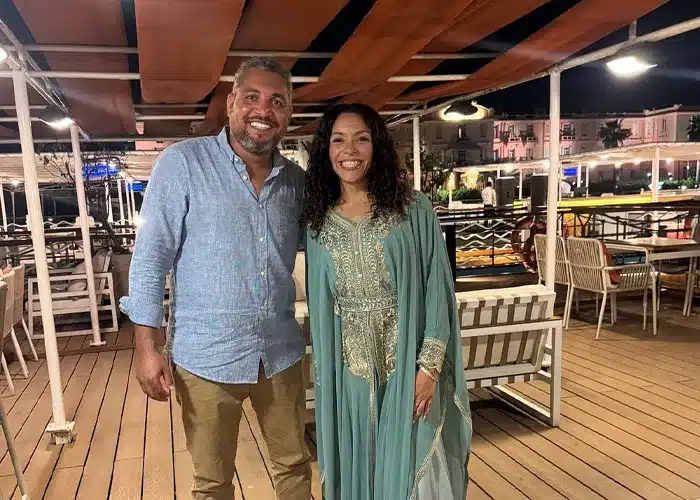
Cairo · Nile · Abu Simbel
8 Days Cairo and 4 Nights Cruise with Abu Simbel
5.0 18 reviews
- 3 nights Cairo + 4-night Nile cruise
- Abu Simbel temples day trip
- Karnak, Luxor, Philae, Edfu, Kom Ombo
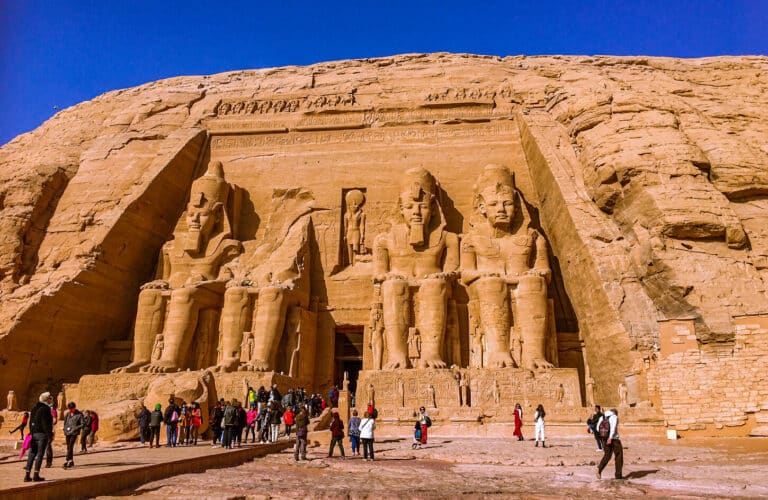
Cairo · Luxor · Aswan · Abu Simbel
6 Day Cairo, Luxor and Aswan with Abu Simbel
5.0 20 reviews
- Pyramids, Sphinx & Egyptian Museum
- Luxor, Aswan & Abu Simbel temples
- Domestic flights + 5 hotel nights
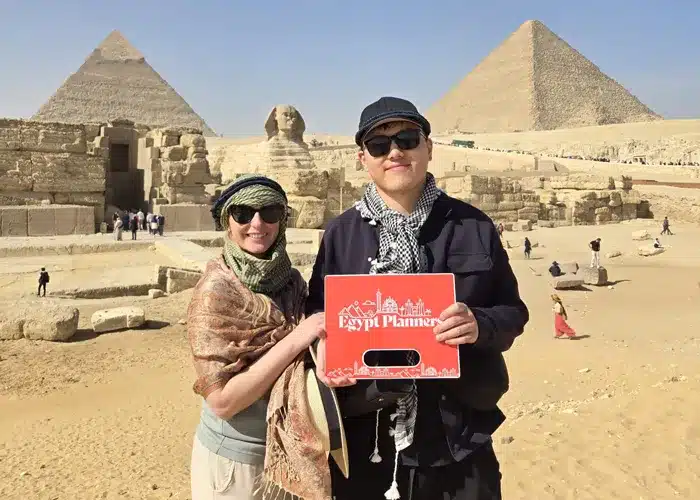
Cairo · Giza · Luxor
5 Day Cairo and Luxor Tour Package
4.9 16 reviews
- Pyramids, Saqqara & Memphis
- Egyptian Museum, Citadel & Khan el-Khalili
- Fly to Luxor: Karnak + Valley of the Kings
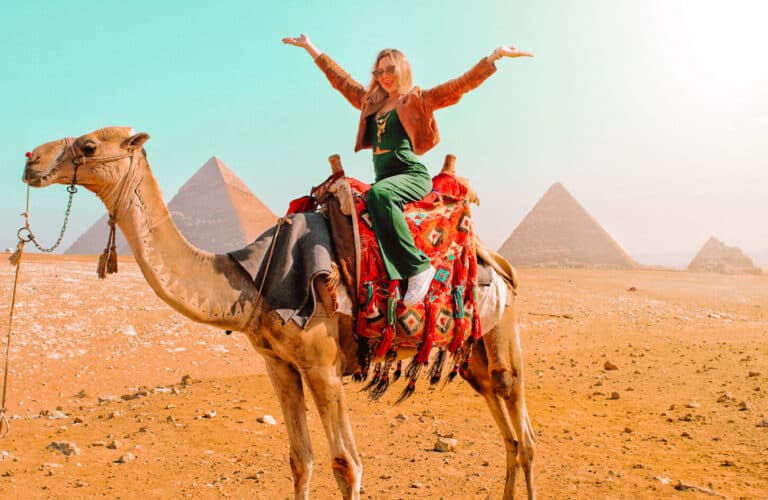
Giza
Grand Egyptian Museum & Giza Pyramids Tour
5.0 8 reviews
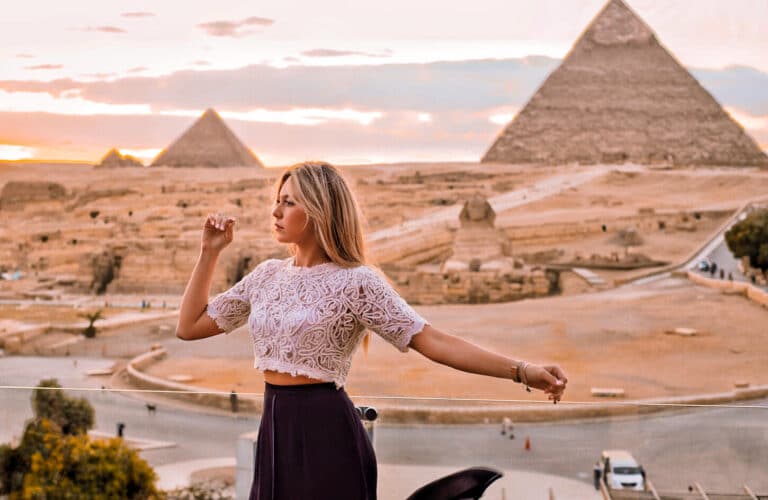
- Pyramids of Giza + the Great Sphinx
- Grand Egyptian Museum guided tour
- Private Egyptologist + lunch included
Giza · Memphis · Saqqara
Full Day Tour to Giza Pyramids, Memphis and Saqqara
5.0 7 reviews
- Pyramids of Giza + the Sphinx
- Memphis open-air museum
- Step Pyramid of Djoser + lunch

Cairo · Alexandria · Nile
10 Day Cairo, Alexandria and Cruise with Abu Simbel
5.0 20 reviews
- Mediterranean day in Alexandria
- 4-night Nile cruise + Abu Simbel
- All flights, hotels & guides included
Want a trip built around the history, not the beach?
Tell Maro which period or which pharaoh you care about and we will build the itinerary around it — with an Egyptologist who can read the walls rather than recite a script.
Ancient Egypt — your questions answered
How long did ancient Egyptian civilisation last?
About three thousand years, from the unification of Upper and Lower Egypt around 3100 BC to the death of Cleopatra in 30 BC, when Egypt became a Roman province. To put that in perspective, Cleopatra lived closer in time to the first Moon landing than to the building of the Great Pyramid. Egyptian religion, art and writing stayed recognisably continuous across that entire span.
Which period built the things I will actually see?
Two of them. The Old Kingdom, roughly 2686–2181 BC, built the pyramids — Djoser at Saqqara first, then Giza. The New Kingdom, roughly 1550–1069 BC, built almost everything else on a standard itinerary: Karnak, Luxor Temple, the Valley of the Kings, the Temple of Hatshepsut and Abu Simbel. The riverbank temples you stop at on a Nile cruise — Edfu, Kom Ombo, Philae and Dendera — are later still, built under the Greek Ptolemies.
Do I need to read about the gods before visiting Egypt?
A little, and it changes the trip. Temple walls are not decoration — they are the same few dozen gods and signs repeated in different arrangements, and once you can pick out Horus, Isis, Anubis, the ankh and a cartouche, the walls start reading as sentences rather than patterns. An hour with our gods and symbols guides before you fly is the highest-return preparation you can do.
What is a cartouche?
The oval loop drawn around a royal name in hieroglyphs, representing a rope tied at one end to protect the king it encircles. Spotting cartouches is the easiest win for a first-time visitor — once you can recognise the shape, you can find the same king's name repeated across a temple, and your guide can tell you which one you are looking at.
Who was the most important pharaoh?
It depends what you mean by important. Khufu built the Great Pyramid. Hatshepsut ruled as king and left the most beautiful temple in Egypt. Akhenaten tried to replace the entire religion with one god and failed. Ramesses II reigned for around 66 years and put his own image on more stone than anyone. Tutankhamun mattered little in life and everything to archaeology, because his was the one royal tomb found nearly intact.
How were hieroglyphs deciphered?
Through the Rosetta Stone, found in 1799, which carried the same decree in hieroglyphs, demotic Egyptian and Greek. Because Greek could still be read, scholars had a key — and in 1822 Jean-François Champollion worked out that the script was neither purely pictorial nor purely alphabetic but a mix of sound signs and meaning signs. That ended roughly fourteen centuries in which nobody could read a single Egyptian wall.
What did the Egyptians believe happened after death?
That you carried on, provided the preparations were right. The body had to survive, which is why it was mummified; the name had to be spoken, which is why it was carved everywhere; and the heart was weighed against the feather of Maat before Osiris. Pass, and you entered the Field of Reeds. Fail, and the heart was eaten and you simply ceased. Almost everything in a tomb is equipment for that journey.
Where can I see all of this in person?
The Grand Egyptian Museum at Giza for the objects, including the full Tutankhamun collection. The Valley of the Kings for painted tombs, Karnak and Luxor Temple for the scale of New Kingdom religion, Edfu and Philae for temples complete enough to read, and Abu Simbel for what a pharaoh did when he wanted to be remembered. Our 8-day Cairo and Nile cruise covers all of it from $1,640.