
Aswan Attractions — what to see, and how to reach it
Aswan is where the Nile widens and Egypt turns Nubian. Every site here is a logistics question first — in town, across the water, beyond the dam, or 280 kilometres south. Sorted that way, the city plans itself.
Aswan, sorted by how you get there
Abu Simbel is not in Aswan. It is roughly 280 km south — a three-and-a-half hour drive each way, or a short flight, and it needs a day of its own. Everything else divides neatly into three: what you can walk or drive to in town, what needs a boat, and the two riverbank temples north towards Luxor.
In town
Aswan is small. These two sit on the edge of the town itself and need nothing more than a taxi and an hour.
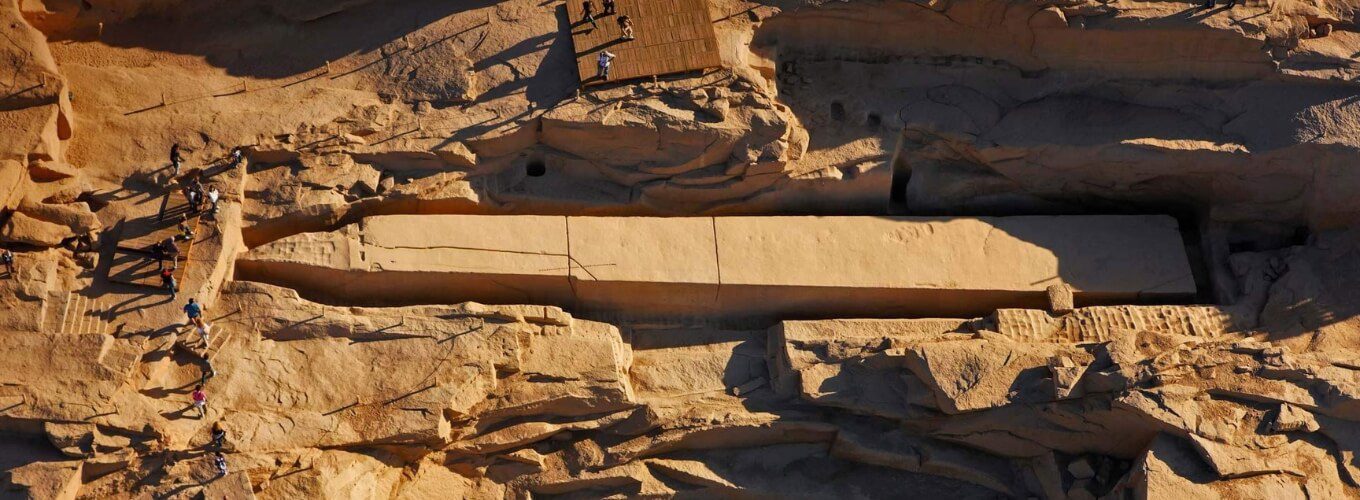
Unfinished Obelisk
A 1,000-tonne obelisk still attached to the granite it was being cut from, abandoned when the rock cracked. The clearest picture anywhere of how the ancient Egyptians actually quarried stone.
Read the guide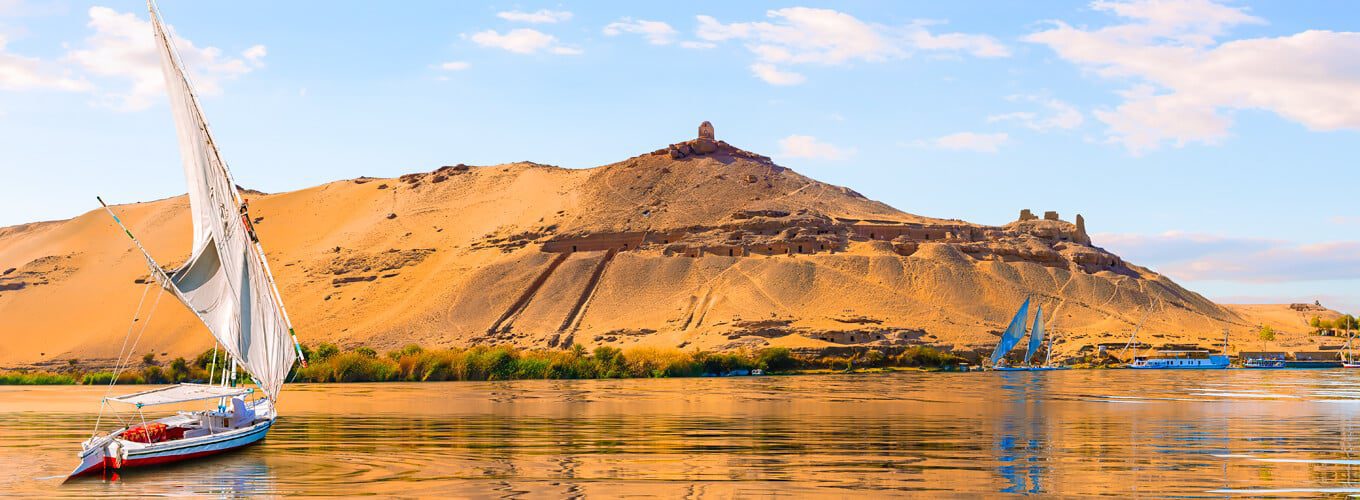
Tombs of the Nobles
Cut into the cliff on the west bank, reached by a short boat crossing and a climb. Governors of the southern frontier, and the best view over Aswan on the way back down.
Read the guideOn the water
The Nile widens at Aswan and scatters into islands. Two of the best things here can only be reached by boat, which is half the pleasure.
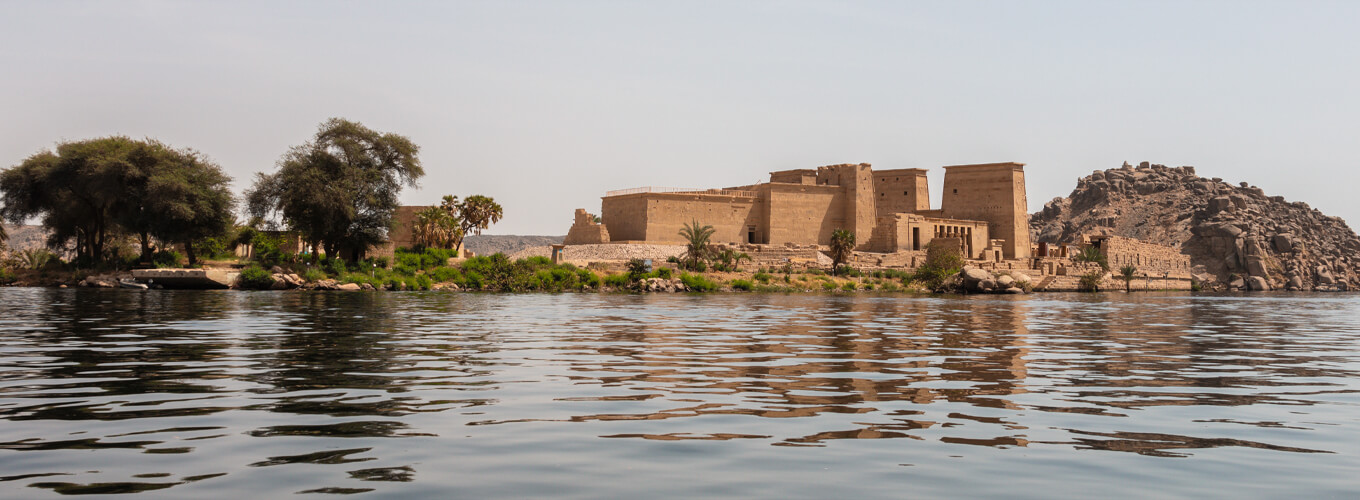
Temple of Philae
The temple of Isis, moved stone by stone to a higher island when the dam flooded its original one. Arriving by motorboat with the columns rising out of the water is the moment people remember.
Read the guide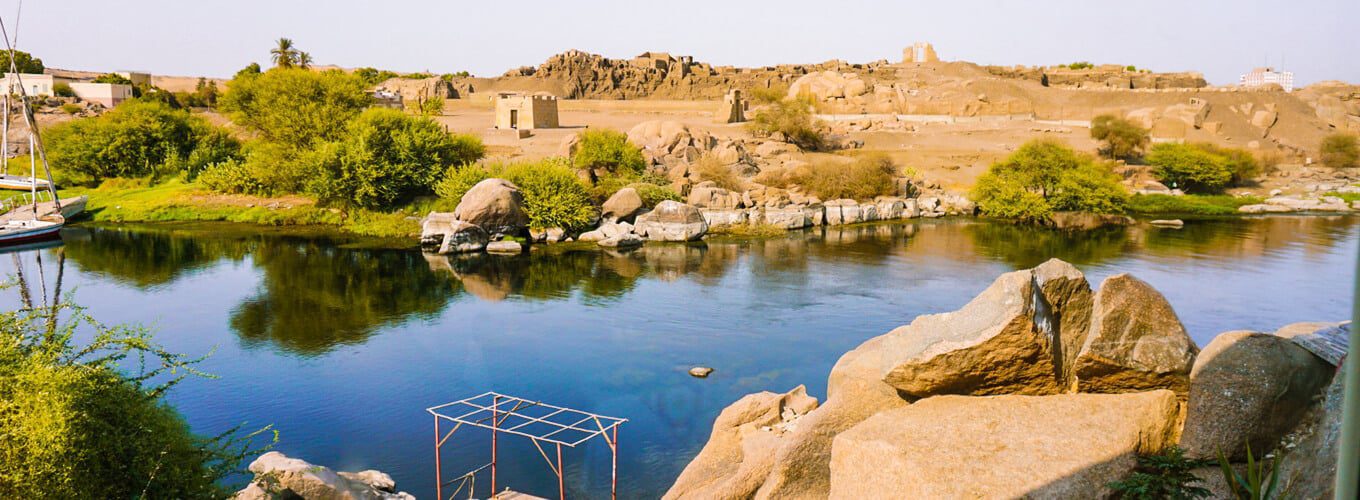
Elephantine Island
The oldest settled part of Aswan, with ruins, a museum, a Nilometer and two working Nubian villages. A ferry from the corniche costs almost nothing.
Read the guideSouth of the dam
Past the High Dam the landscape changes completely — Lake Nasser, desert, and eventually the greatest temple in Egypt. Abu Simbel is not in Aswan and the drive is real.
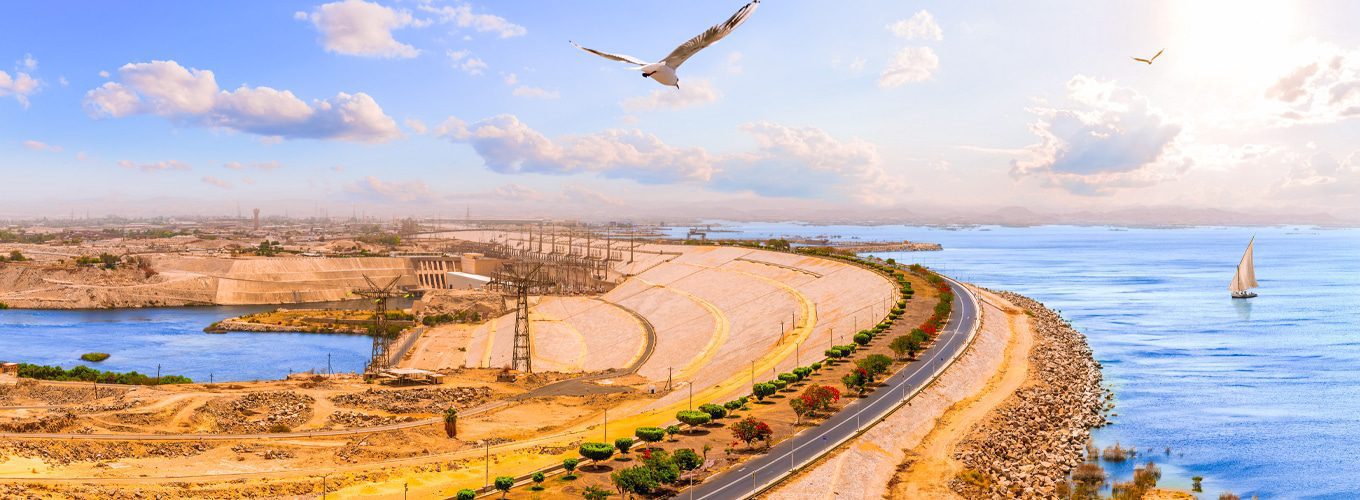
Aswan High Dam
Thirteen kilometres south of town, and the reason modern Egypt has reliable water and power — and the reason Philae and Abu Simbel had to be moved at all. A short stop with a long story.
Read the guide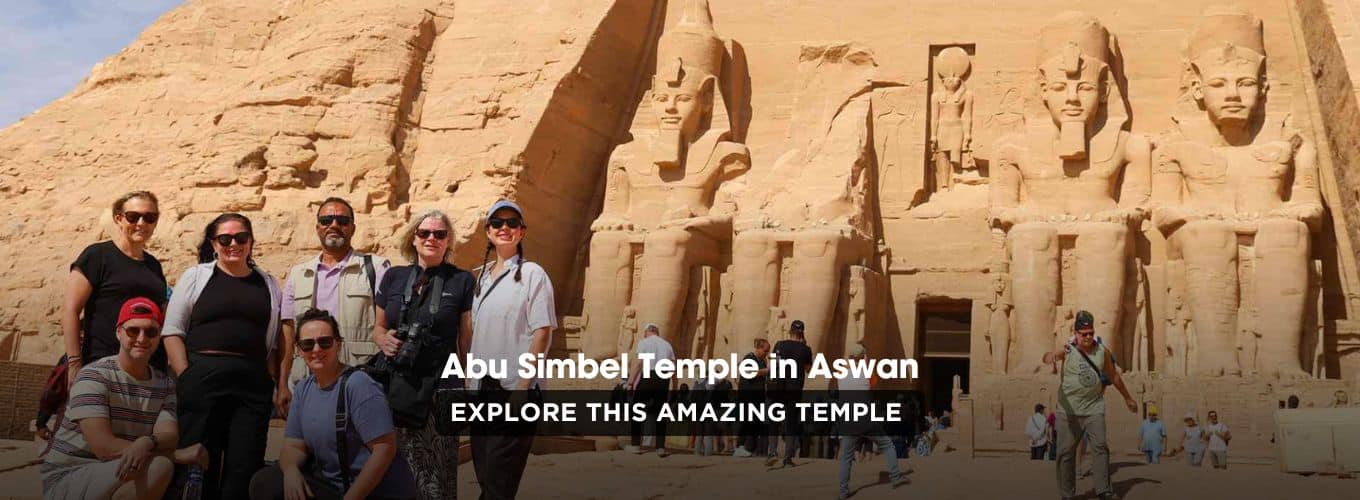 Not in Aswan — 280 km south
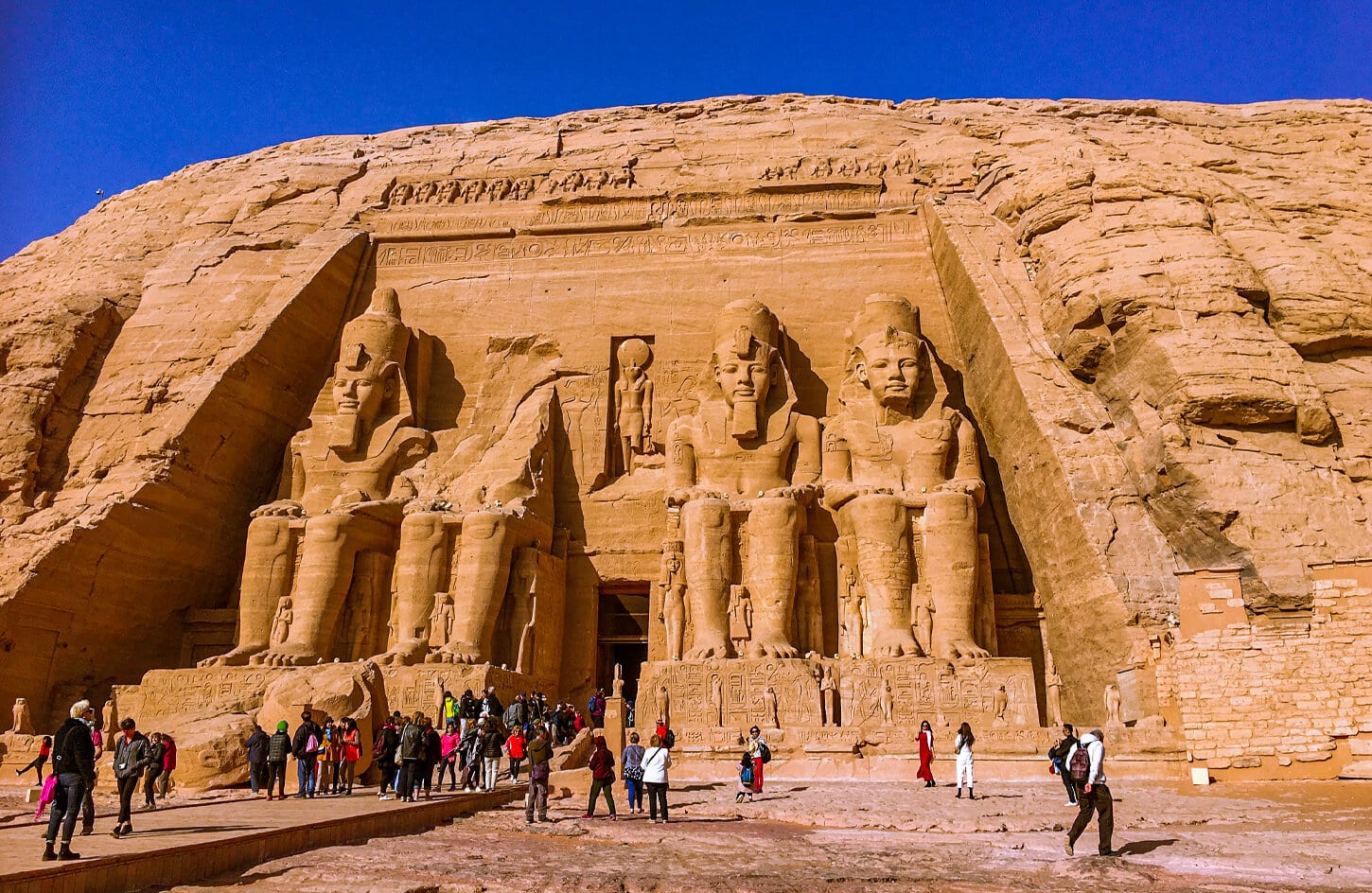
 Abu Simbel
Two temples cut into a cliff for Ramesses II, sawn into blocks in the 1960s and rebuilt 65 metres higher to escape the rising lake. Roughly 280 km each way by road, or a short flight.
Read the guideNorth, along the river
Two riverbank temples between Aswan and Luxor. If you are on a Nile cruise you stop at both without a travel day; from a hotel in Aswan they are a half-day drive.
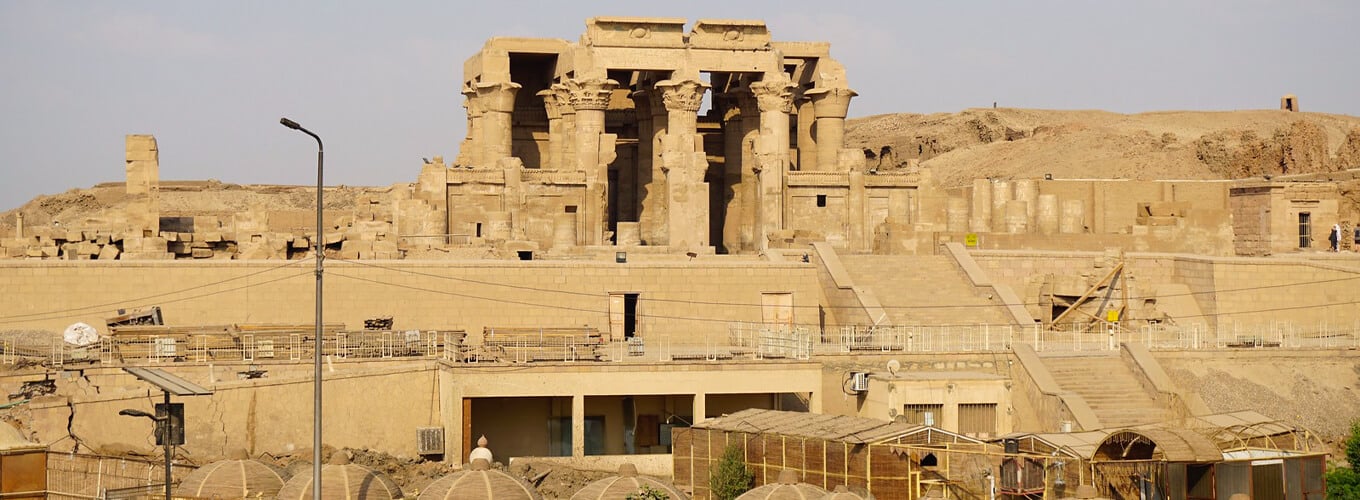
Kom Ombo Temple
The only temple in Egypt built symmetrically for two gods — Sobek the crocodile and Haroeris. It sits right on the bank, so you walk up from the boat. There is a crocodile museum next door.
Read the guide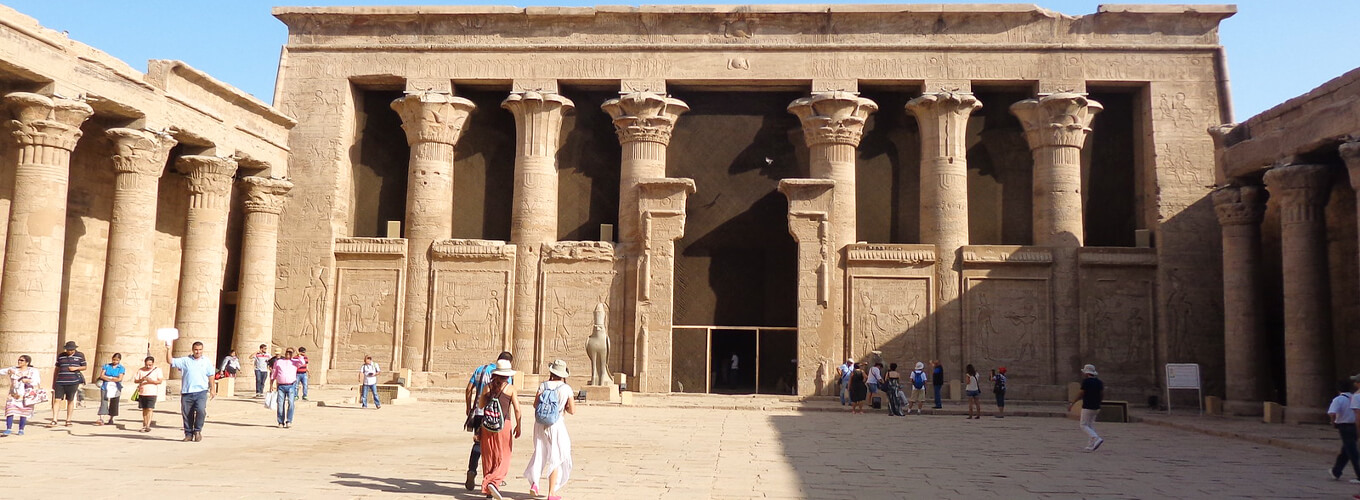
Temple of Edfu
The best-preserved temple in Egypt — roof intact, walls complete, the falcon god Horus still standing at the gate. Reached from the mooring by horse carriage.
Read the guideThings to do in Aswan at night
Aswan is the one Egyptian city where the evening beats the afternoon. Four things worth staying up for.
Felucca at sunset
The classic Aswan hour. A lateen-sailed boat around Elephantine and Kitchener's Island as the light goes orange and the granite turns pink. Agree the price and the length before you step on.
Sound and light at Philae
The temple island, floodlit, reached by motorboat after dark. Shows run in several languages on a rotating schedule, so check which language is on the night you want.
Dinner in a Nubian village
On Elephantine or across on the west bank — bright painted houses, Nubian food and music. Arranged through your guide rather than turning up, and worth doing on your first night.
The corniche and the souk
Aswan's market is smaller and far less pushy than Khan El Khalili in Cairo, and it comes alive after sunset. Spices, hibiscus and Nubian textiles, with the river a street away.
How many days do you need in Aswan?
Two — one for the city, one for Abu Simbel. Trying to fit both into a single day is the most common mistake made here.
Aswan itself
Unfinished Obelisk and the High Dam in the morning, Philae by motorboat late morning, then a felucca at sunset. No Abu Simbel — there is not time for both in one day and doing it would cost you Aswan entirely.
Add Abu Simbel
Day one as above. Day two leaves at 4am for Abu Simbel by road, back around lunchtime, then Elephantine Island and the souk in the late afternoon. This is what most of our itineraries build in.
Slow it down
Add the Tombs of the Nobles, a Nubian village on the west bank, and time simply sitting on the river — which is what Aswan is genuinely for. If you fly to Abu Simbel rather than drive, this fits into two.
Tours that put you in Aswan
Prices per person, twin share, with hotels or the cruise, internal flights, entry fees, a private Egyptologist and transfers included.
Cairo · Luxor · Aswan · Abu Simbel
6 Day Cairo, Luxor and Aswan with Abu Simbel
5.0 20 reviews
- Pyramids, Sphinx & Egyptian Museum
- Luxor, Aswan & Abu Simbel temples
- Domestic flights + 5 hotel nights

Cairo · Aswan · Luxor
8 Days Cairo & 3 Nights Cruise by Train
5.0 16 reviews
- Pyramids, Saqqara & Egyptian Museum
- 3-night 5★ Nile cruise Aswan → Luxor
- 2 nights on the sleeper train

Cairo · Nile · Abu Simbel
8 Days Cairo and 4 Nights Cruise with Abu Simbel
5.0 18 reviews
- 3 nights Cairo + 4-night Nile cruise
- Abu Simbel temples day trip
- Karnak, Luxor, Philae, Edfu, Kom Ombo

Cairo · Alexandria · Nile
10 Day Cairo, Alexandria and Cruise with Abu Simbel
5.0 20 reviews
- Mediterranean day in Alexandria
- 4-night Nile cruise + Abu Simbel
- All flights, hotels & guides included

Cairo · Aswan · Luxor
7 Day Cairo with Nile Cruise
5.0 17 reviews
- Pyramids + Egyptian Museum in Cairo
- 3-night deluxe Nile cruise Aswan → Luxor
- Internal flights + all transfers included

Cairo · Aswan · Luxor · Hurghada
12 Day Cairo, Nile Cruise and Hurghada
5.0 16 reviews
- Pyramids, Egyptian Museum & Old Cairo
- 3-night Nile cruise Aswan → Luxor
- 3 nights on the Red Sea in Hurghada
What to know before you arrive
Getting to Abu Simbel
Roughly 280 km each way. By road it is a 3 to 3½ hour drive, leaving Aswan around 4am to be there before the heat, and back by early afternoon. There are also short flights from Aswan, which turn it into a half day and cost more. Both are worth it — skipping it is the regret we hear most.
Getting to Aswan
A one-hour flight from Cairo, an overnight sleeper train, or by Nile cruise from Luxor. Most of our itineraries fly one direction and cruise the other, so you never repeat the same stretch twice.
Boats and prices
Feluccas and motorboats are hired by the boat, not the seat, and the price is negotiable — agree the amount and the duration before you get on. Anything included in a tour is already arranged, so you are not haggling on holiday.
Heat
Aswan is the hottest city in Egypt and regularly passes 40 °C from May to September. Sightseeing belongs to the early morning and the evening; the middle of the day belongs to the hotel, the boat or a shaded terrace over the river.
Nubia
Aswan is where Egypt becomes Nubian — a different language, different music and different architecture, and communities that were relocated when Lake Nasser flooded their villages. The Nubian Museum in town is the best hour you can spend understanding it.
How long you need
Two days. One covers Aswan itself properly; the second buys you Abu Simbel. Trying to do both in a single day means a 4am start and a temple you barely see, and Aswan is the one city in Egypt that rewards slowing down.
Want Abu Simbel done properly?
Tell Maro how long you have and we will tell you whether to drive or fly, whether Aswan works better at the start or the end of your cruise, and what it costs — before you commit to anything.
Aswan attractions — your questions answered
What are the top attractions in Aswan?
The Temple of Philae on its island, reached by motorboat, comes first. Then the Unfinished Obelisk in the granite quarries, the Aswan High Dam thirteen kilometres south, and Elephantine Island with its Nubian villages. Abu Simbel is the greatest temple of them all but sits 280 km further south, so treat it as a separate day rather than an Aswan sight. A felucca at sunset belongs on the list as much as any monument.
Is Abu Simbel in Aswan?
No, and this is the most common misunderstanding about Aswan. Abu Simbel is roughly 280 km south of the city, close to the Sudanese border — a three to three and a half hour drive each way, or a short flight. Tours leave Aswan around 4am to arrive before the heat and are back by early afternoon. It is worth the day, but it cannot be squeezed into a morning that also covers Philae and the dam.
What is there to do in Aswan at night?
Four things, and they are among the best hours of an Egypt trip. A felucca at sunset around Elephantine and Kitchener's Island, when the granite turns pink. The sound and light show at Philae, reached by motorboat after dark. Dinner in a Nubian village, arranged through your guide. And the corniche and souk, which are far smaller and gentler than Khan El Khalili in Cairo and come alive after sunset.
How many days do you need in Aswan?
Two. One day covers the city itself — the Unfinished Obelisk, the High Dam, Philae by boat and a felucca at sunset. The second day is Abu Simbel, leaving at 4am by road and back around lunchtime, with Elephantine Island in the afternoon. A third day is not wasted here: Aswan is the one place in Egypt that rewards sitting still and watching the river.
Why was the Temple of Philae moved?
Because the Aswan High Dam would have drowned it. The original island, Philae, spent much of the year underwater after the first dam was built, and the High Dam in the 1960s would have submerged it permanently. UNESCO dismantled the temple into some 40,000 blocks and rebuilt it on nearby Agilkia Island, reshaped to match the original. Abu Simbel was moved in the same rescue campaign, cut into blocks and raised 65 metres.
How do you get to Aswan?
Three ways. A one-hour flight from Cairo is the fastest. The overnight sleeper train takes about thirteen hours and saves you a hotel night. Or you arrive by Nile cruise from Luxor, which is how most of our travellers do it. The best itineraries use two different modes — fly down and cruise back, or cruise down and fly home — so you never cover the same stretch twice.
Is Aswan worth visiting?
Yes, and it is the city travellers are most surprised by. Luxor has the bigger monuments, but Aswan has the better setting — the Nile is at its widest and clearest here, scattered with granite islands, and the pace is noticeably slower than anywhere north. It is also the gateway to Nubia and to Abu Simbel. If your itinerary gives Aswan half a day, ask for a full one.
When is the best time to visit Aswan?
October to April. Aswan is the hottest city in Egypt and regularly passes 40 °C from May through September, which makes the middle of the day genuinely unworkable outdoors. In the cooler months the mornings are perfect and the evenings on the river are the reason people come back. Whatever the month, plan sightseeing for early and keep the afternoon for shade.