
Nile Cruise Itineraries — the Luxor to Aswan route, night by night
Every standard Nile cruise sails the same 210 kilometres of river. This page shows you the five stops, what you see at each, how 3 nights differs from 4, and which direction each one runs — then the 38 boats that sail it.
Where a Nile cruise actually goes
Every standard Nile cruise sails the same stretch: Luxor to Aswan, about 210 river kilometres, with three stops in between. The temples of Edfu and Kom Ombo sit on the bank itself — that is the whole point of the cruise. You reach them without a travel day, and you unpack once.
Luxor Start or finish
The biggest stop by far, and the only one that needs two half-days. The East Bank holds Karnak and Luxor Temple; the West Bank holds the royal tombs.
Esna The lock
Not a sightseeing stop on most sailings — Esna is where the boat queues for the lock that steps it up or down the river. Dahabiyas start and end here instead of Luxor.
Edfu Temple of Horus
The best-preserved temple in Egypt — roof intact, walls complete. You reach it from the mooring by horse carriage, usually first thing in the morning.
Kom Ombo The twin temple
The only temple in Egypt built symmetrically for two gods — Sobek the crocodile and Haroeris. It sits directly on the bank, so you walk up from the boat.
Aswan Start or finish
The southern end. Philae sits on an island reached by motorboat, and Abu Simbel is a separate excursion by road or dawn flight from here.
3 nights, 4 nights or a dahabiya
Every cruiser in our fleet runs both standard lengths. They cover the same temples — the difference is one extra night, and which way the boat points.
| Length | Direction | Departs | Temples covered | Abu Simbel | From |
|---|---|---|---|---|---|
| 3 nights Standard cruiser | Aswan → LuxorDownstream, with the current | Wednesday & Friday | Philae · Kom Ombo · Edfu · Karnak · Luxor Temple | Add a day before boarding | $660per person |
| 4 nights Standard cruiser | Luxor → AswanUpstream, against the current | Saturday & Monday | Karnak · Luxor Temple · West Bank · Edfu · Kom Ombo · Philae | Fits as a day trip from Aswan | $660per person |
| 5 or 7 nights Dahabiya | Esna ↔ AswanUnder sail, both ways | Saturday & Monday | The same temples, plus small riverside sites the big boats sail past | Optional from Aswan | On requestchartered by cabin |
Luxor to Aswan, or Aswan to Luxor?
You do not really choose. The Nile flows north, so the direction comes with the length you book — downstream is faster, and that is the three-night sailing.
3 nights · downstream
With the current, so the boat covers the same river in one night less. Starts with Philae and finishes at Karnak.
- Departs
- Wednesday and Friday
- Best for
- Fitting a cruise into a 7-day Egypt trip
- Watch for
- The Luxor West Bank is usually a land day, not a cruise day
4 nights · upstream
Against the current, and a night longer. Builds from Karnak up the river to Philae and Abu Simbel.
- Departs
- Saturday and Monday
- Best for
- Anyone who wants Abu Simbel without a rush
- Watch for
- Both Luxor banks are covered from the boat on this sailing
What happens on each day of the sailing
Boards at Luxor on Saturday or Monday. This is the sailing to pick if you want Abu Simbel.
Luxor · East Bank
Board at Luxor around midday and eat lunch on the boat. Afternoon at Karnak — the largest religious complex ever built — then Luxor Temple, which is at its best in the late light. Overnight moored at Luxor.
Luxor · West Bank, then sail
Early start for the Valley of the Kings, the Temple of Hatshepsut and the Colossi of Memnon before the heat. Back on board for lunch, then the boat casts off south and queues for the Esna lock. Afternoon on the sun deck.
Edfu & Kom Ombo
Horse carriage from the Edfu mooring to the Temple of Horus first thing. Sail on through the morning, then Kom Ombo in the late afternoon — the twin temple is a two-minute walk up from the bank. Sail overnight to Aswan.
Aswan
Philae Temple by motorboat, the High Dam and the Unfinished Obelisk. Abu Simbel is the optional excursion from here, by road convoy or dawn flight. Final night on board at Aswan.
Disembark Aswan
Breakfast, then off the boat after a last look at the river. Most travellers fly Aswan–Cairo the same day.
Boards at Aswan on Wednesday or Friday. Shorter because it runs downstream, with the current.
Aswan
Board at Aswan and eat lunch on board. Afternoon at Philae Temple on its island, the High Dam and the Unfinished Obelisk. Overnight moored at Aswan — the best evening of the trip for a felucca at sunset.
Kom Ombo & Edfu
Sail north after breakfast to Kom Ombo, then on to Edfu for the Temple of Horus by horse carriage. Back on board and sailing again by evening.
Esna lock, then Luxor
Through the Esna lock in the morning and on to Luxor. Afternoon at Karnak and Luxor Temple. Final night moored at Luxor.
Disembark Luxor
Off the boat after breakfast. The West Bank — the Valley of the Kings and Hatshepsut — is normally added as a Luxor day rather than a cruise day on this sailing.
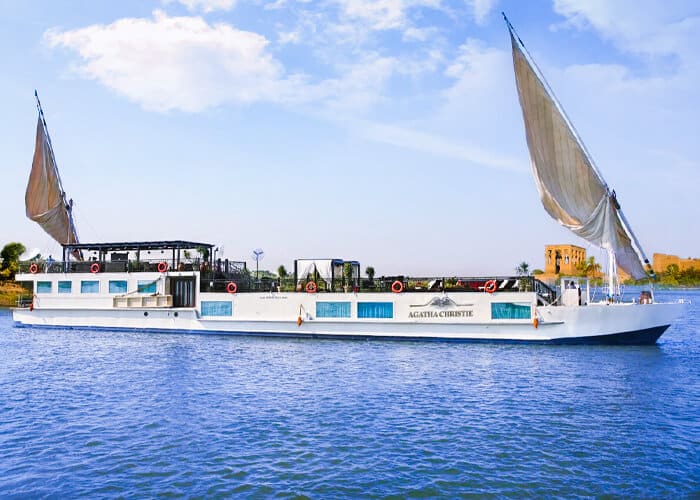
38 boats sail this route — here is how they differ
The itinerary barely changes between boats. What changes is the cabin, the food and how many people are on board. Prices are per person, full board.
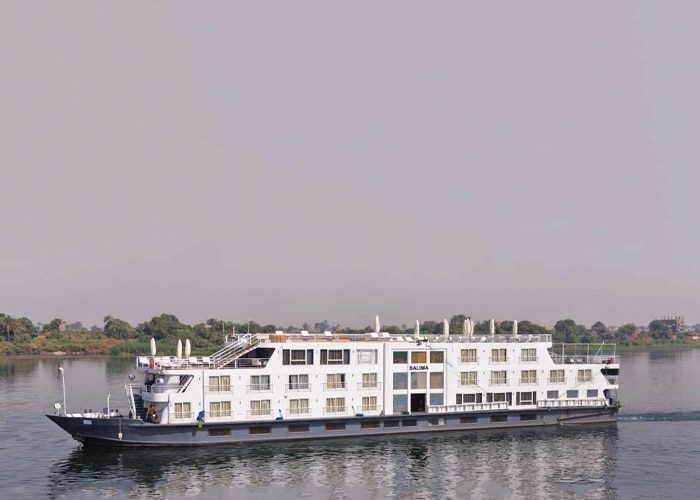
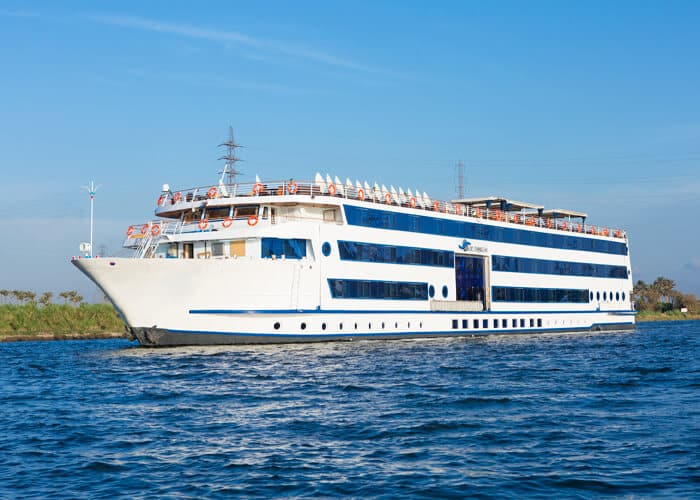
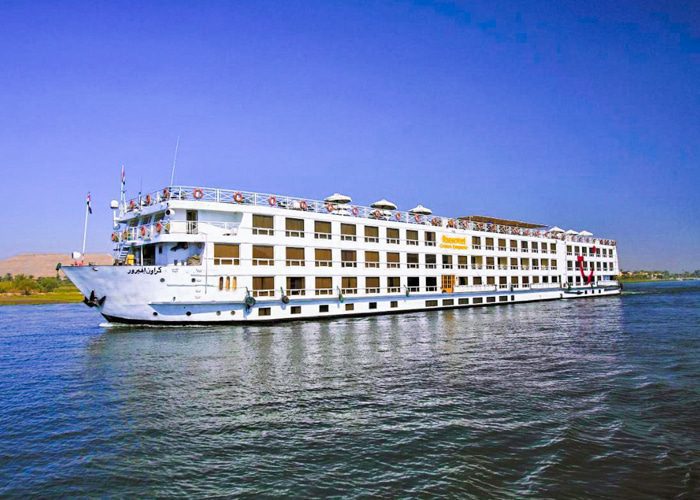
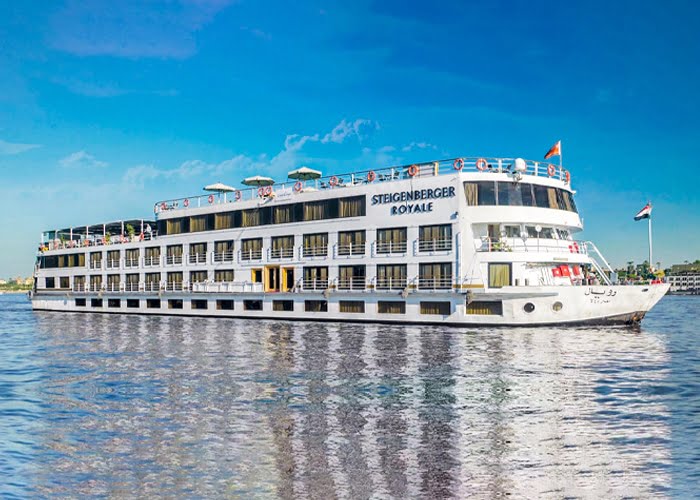
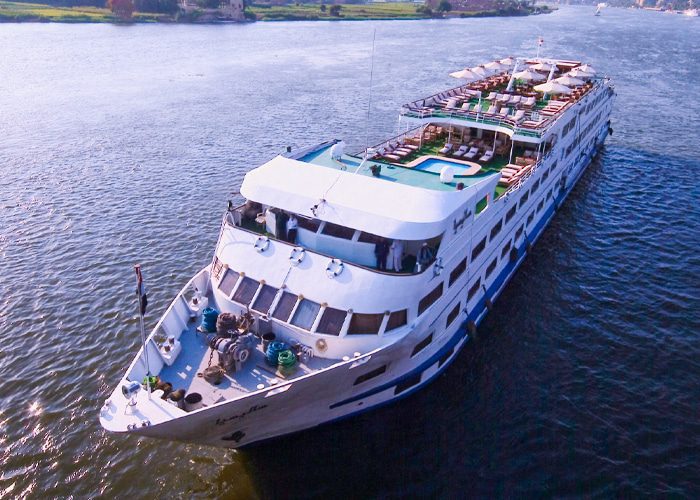
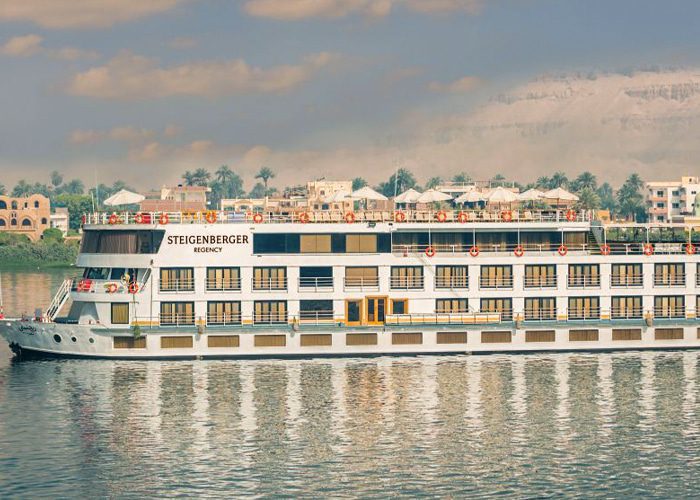
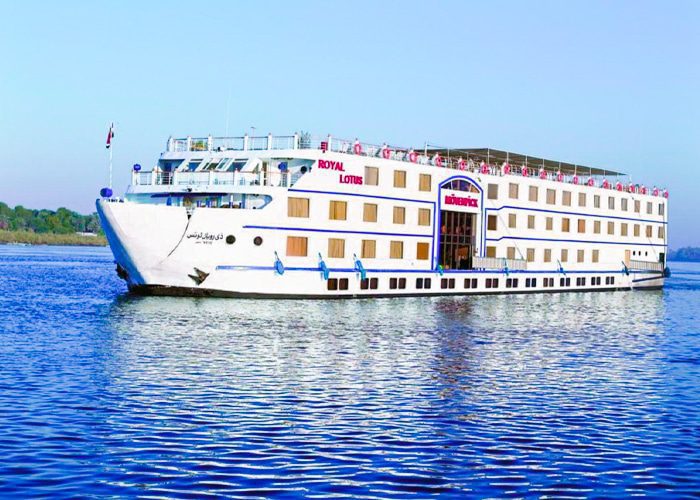
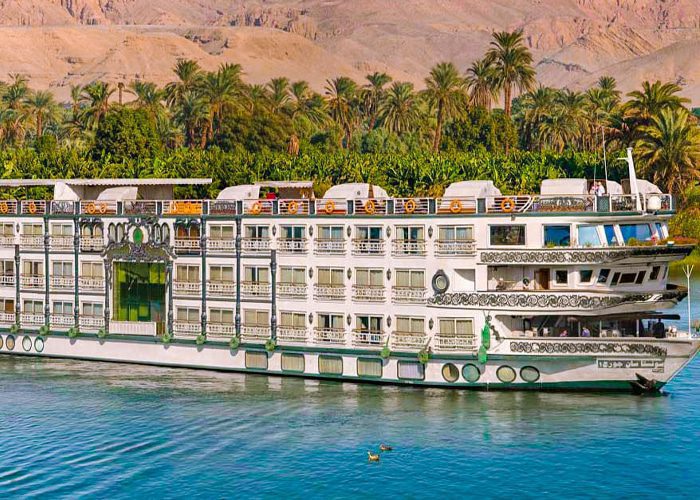
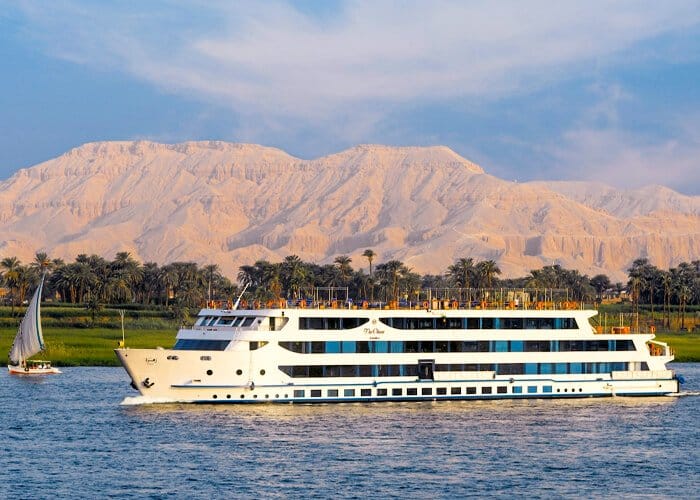
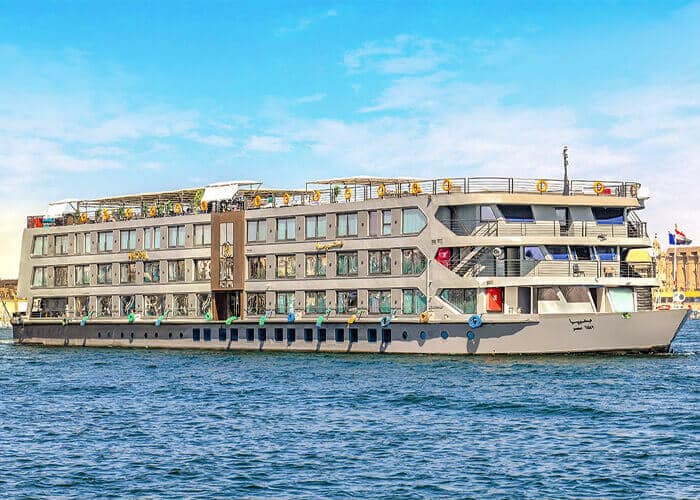
Deluxe
14 boats · from $660Comfortable 5-star boats — en-suite river-view cabins, sun deck, pool, full board. What most of our packages use.
Luxury
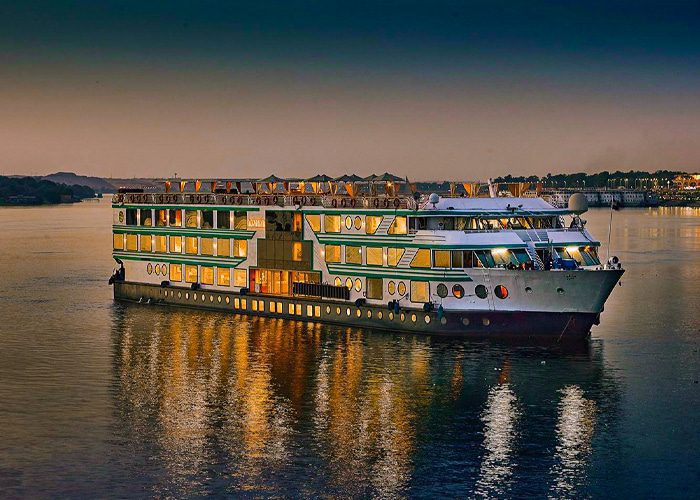
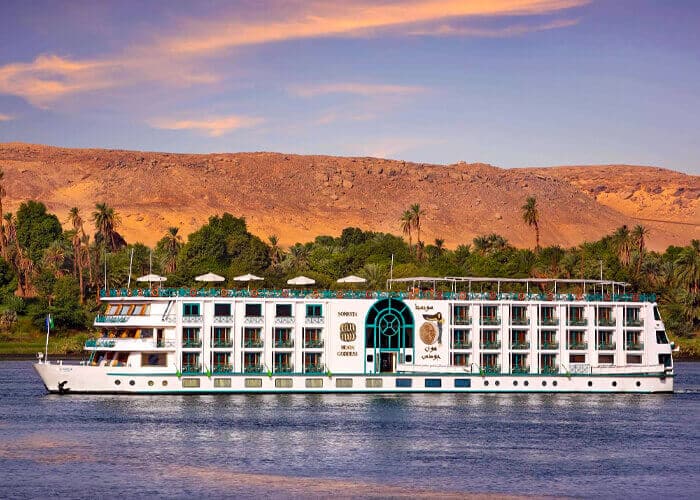
16 boats · from $876Larger cabins, better food and quieter decks — up to the Oberoi boats and the Historia at the top of the river.
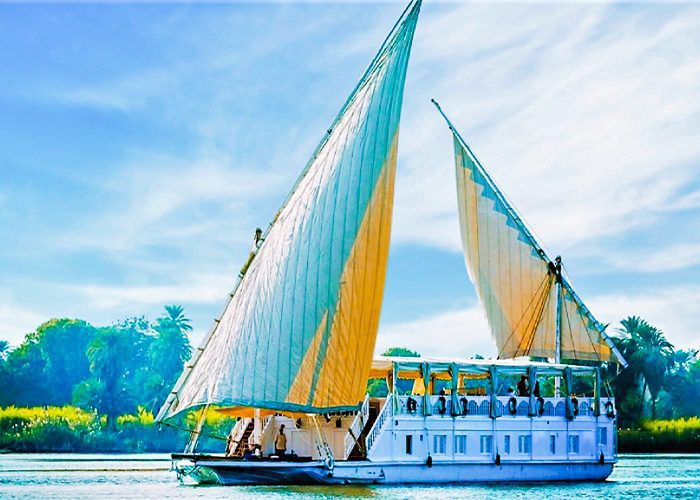
Dahabiya
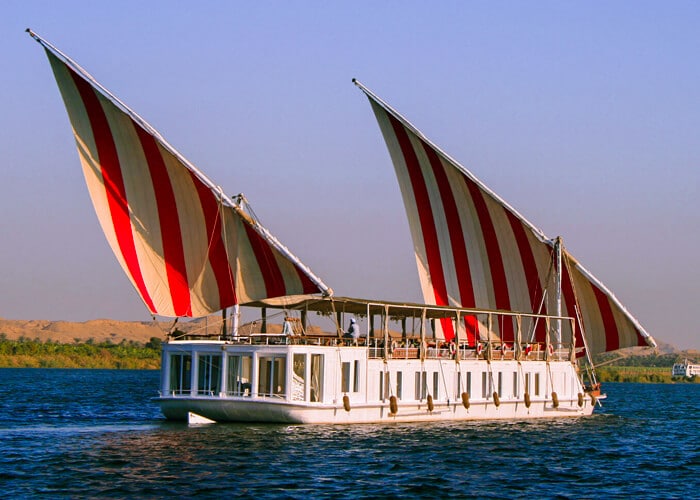
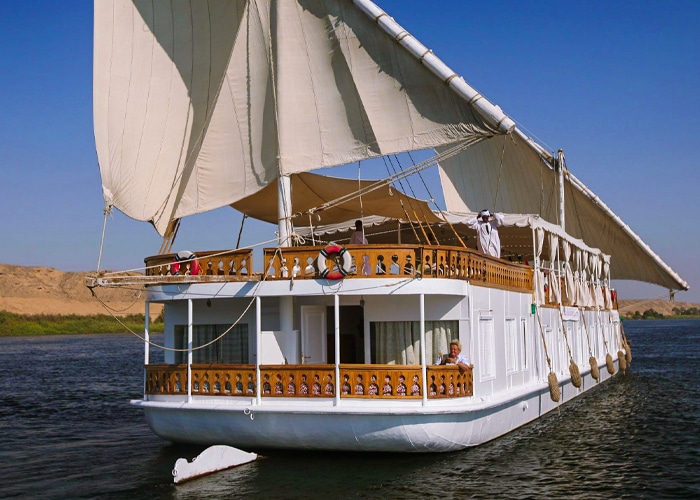
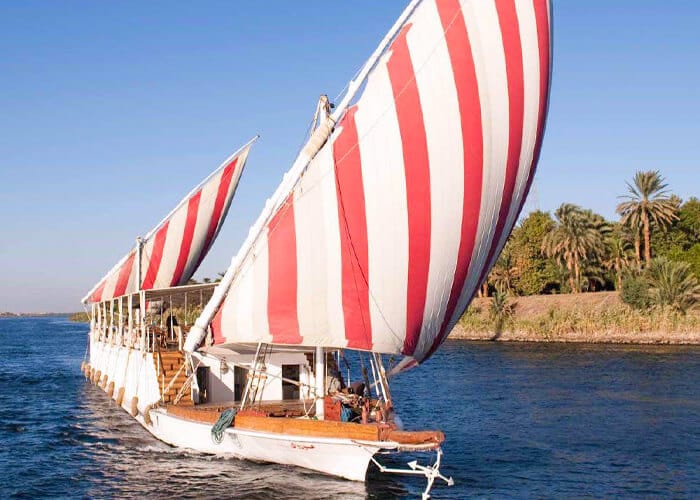
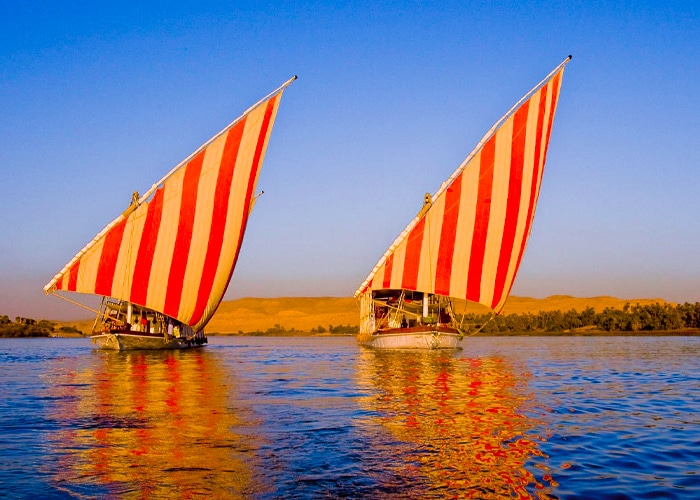
8 boats · from On requestSmall sailing boats, 8–12 cabins, 5 or 7 nights between Esna and Aswan. No engine, no crowds — they moor where the big boats cannot.
Cairo plus the cruise, booked as one trip
A cruise on its own leaves you to arrange the flights, the hotels and the guide. These are the full trips, per person twin-share, with everything included except international flights.
The things nobody tells you until you are on the boat
What is included
Full board — breakfast, lunch, dinner and afternoon tea — the cabin, and all sailing. Drinks are extra on almost every boat, including bottled water at meals. Guided excursions and entry tickets come from your tour, not the boat, so check they are in your package.
Which cabin to book
Upper deck is quieter and has the better view; lower deck is cheaper and steadier. Cabins are the same size on most boats, so the deck is the real choice. Ask for a cabin away from the engine at the stern.
Tipping
A crew tip box is standard and separate from your guide and driver. Budget roughly $8–12 per person per day for the boat crew, handed in at the end. Tipping is expected rather than optional in Egypt — plan for it rather than being surprised by it.
What to wear
Light, loose clothing and a hat for the temples, with shoulders and knees covered — the sites are hot, dusty and often unshaded. On board is relaxed; most boats ask for long trousers at dinner. Bring a fleece for December and January evenings on deck.
Will I get seasick
Almost certainly not. The Nile is a slow river with no swell — the boat glides. If you are very motion-sensitive, take a mid-ship lower-deck cabin, but genuine seasickness on a Nile cruiser is rare.
Wi-Fi and phones
Most boats have Wi-Fi in the lounge, and it is slow. Mobile data works well the whole way between Luxor and Aswan, so an Egyptian SIM is the more reliable option if you need to stay connected.
Best time to sail
October to April. Luxor and Aswan regularly pass 40 °C from May to September, which makes the temple mornings hard work even though the boat itself stays comfortable. December and January are cool, busy and beautiful.
The Esna lock
Every standard cruiser passes through the lock at Esna, and boats queue for it — sometimes for hours. It is part of the trip, not a fault. Dahabiyas start south of it, at Esna itself, which is why their route is written Esna to Aswan.
Not sure which boat or which sailing?
Tell Maro your dates and we will tell you which boats are actually available that week, what the cabin difference is worth, and whether three or four nights fits your trip better.
Nile cruise itineraries — your questions answered
How many nights is a Nile cruise?
Three or four on a standard cruiser. Every boat in our fleet runs both: three nights sailing Aswan to Luxor, departing Wednesday and Friday, and four nights sailing Luxor to Aswan, departing Saturday and Monday. Dahabiyas — the small sailing boats — run five or seven nights between Esna and Aswan. Both standard lengths cover the same temples; the four-night sailing simply gives you an extra night and makes Abu Simbel from Aswan comfortable rather than rushed.
Should I sail Luxor to Aswan or Aswan to Luxor?
You do not really choose the direction — the direction comes with the length. Aswan to Luxor runs downstream with the current and takes three nights. Luxor to Aswan runs upstream against the current and takes four. Both visit Karnak, Luxor Temple, Edfu, Kom Ombo and Philae, just in opposite order. Pick four nights if you want Abu Simbel or a slower pace; pick three if you are fitting the cruise into a shorter Egypt trip.
Which temples do you see on a Nile cruise?
Five stops over roughly 210 river kilometres. At Luxor: Karnak, Luxor Temple and, on the West Bank, the Valley of the Kings, the Temple of Hatshepsut and the Colossi of Memnon. Sailing south: the Temple of Horus at Edfu, reached by horse carriage from the mooring, and the twin temple of Kom Ombo right on the bank. At Aswan: Philae on its island, the High Dam and the Unfinished Obelisk. Abu Simbel is a separate excursion from Aswan, not a cruise stop.
Can I do a 7-night Nile cruise?
Yes, on a dahabiya. Our Merit dahabiya sails five or seven nights between Esna and Aswan under sail, mooring at small riverside sites the large boats pass. On a standard cruiser, seven nights means a Luxor–Aswan–Luxor round trip, which we book on request rather than as a scheduled sailing. If you want a full week on the river, the dahabiya is the better experience.
How much does a Nile cruise cost?
Our deluxe boats start at $660 per person and the luxury fleet at $876, rising to $2,145 on the Oberoi Zahra and $2,700 on the Historia. Dahabiyas are quoted per booking because the boats are chartered whole or by cabin. If you want the cruise as part of a complete trip, our 8-day Cairo-and-cruise package is $1,205 per person including hotels, the sleeper train, every entry fee and a private Egyptologist.
How much should I tip on a Nile cruise?
Around $8–12 per person per day for the boat crew, given as a single amount at the end of the sailing into the crew tip box. Your Egyptologist guide and driver are tipped separately, and are not part of that box. Small notes are genuinely useful — for the horse carriage driver at Edfu, the motorboat to Philae, and the porters at embarkation.
Is a Nile cruise worth it?
For a trip of seven days or more, yes. Edfu and Kom Ombo sit on the riverbank between Luxor and Aswan, so a cruise reaches them with no extra travel day and you unpack once instead of three times. The alternative — covering the same ground by road and flight, hotel to hotel — costs you a day and a lot of packing. On a trip of six days or fewer, a cruise will not fit and land travel is the right call.
What happens at the Esna lock?
Every standard cruiser between Luxor and Aswan passes through a lock at Esna that raises or lowers the boat to the next stretch of river. Boats queue, and the wait can run to a few hours depending on traffic. It is a normal part of the sailing and a good stretch to spend on the sun deck. Dahabiyas avoid it entirely by starting at Esna.