
Oases and Deserts of Egypt — by route, not by name
Ninety-five per cent of Egypt is desert, and almost none of it is on a standard itinerary. The oases are not one trip but three, plus a day out — and the only useful way to sort them is by how far from Cairo they actually are.
The oases are not one trip
Siwa is not on the same journey as Bahariya, and the White Desert is not a day trip from Cairo. Fayoum is 100 km out and fits into a day. Bahariya and the White Desert are 370 km and need two nights. Dakhla and Kharga are the long loop beyond that. Siwa is 750 km away on a completely different road, through Alexandria — treat it as its own trip.
Fayoum
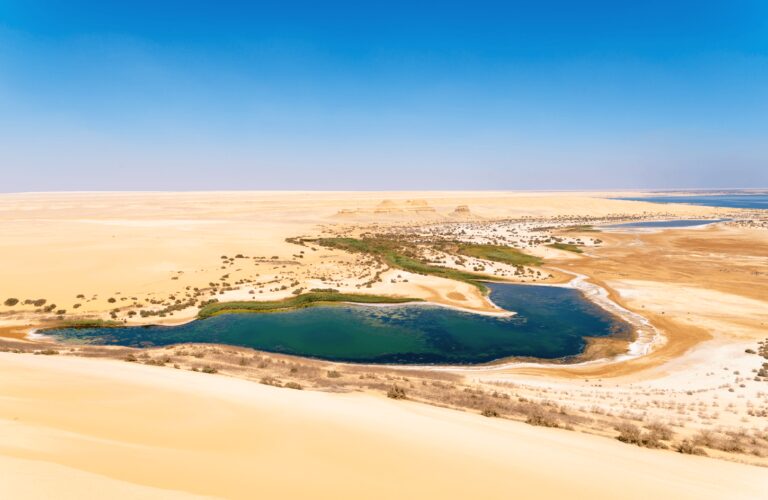
≈100 km from Cairo A day tripNot really a desert trip at all — a huge natural depression fed by a canal off the Nile, close enough to Cairo to do in a day. Lakes, waterfalls, a fossil valley and a pottery village.
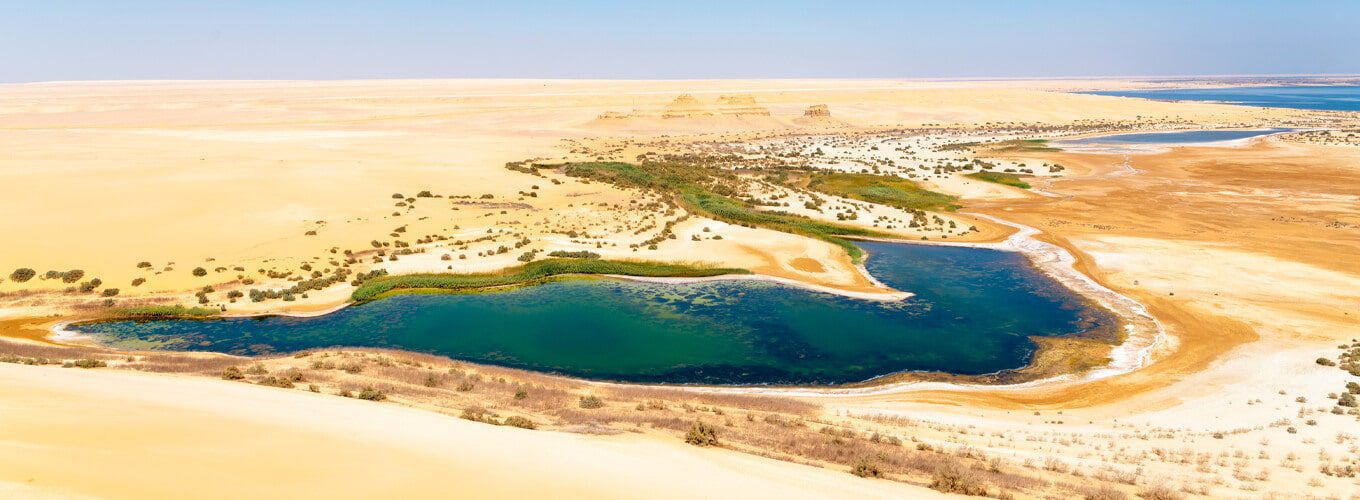
Fayoum Oasis
Lake Qarun, farmland and the closest thing to countryside within reach of Cairo. The base for everything else here.
Read the guide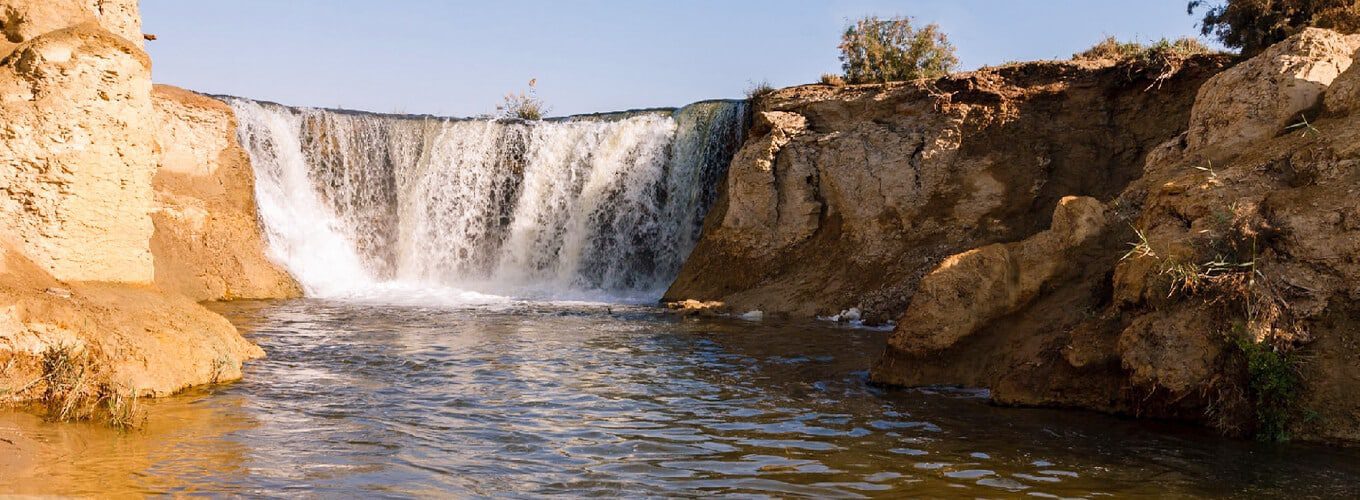
Wadi El Rayan
Two man-made lakes joined by Egypt's only waterfalls, in the middle of open desert. Odd, and genuinely beautiful.
Read the guide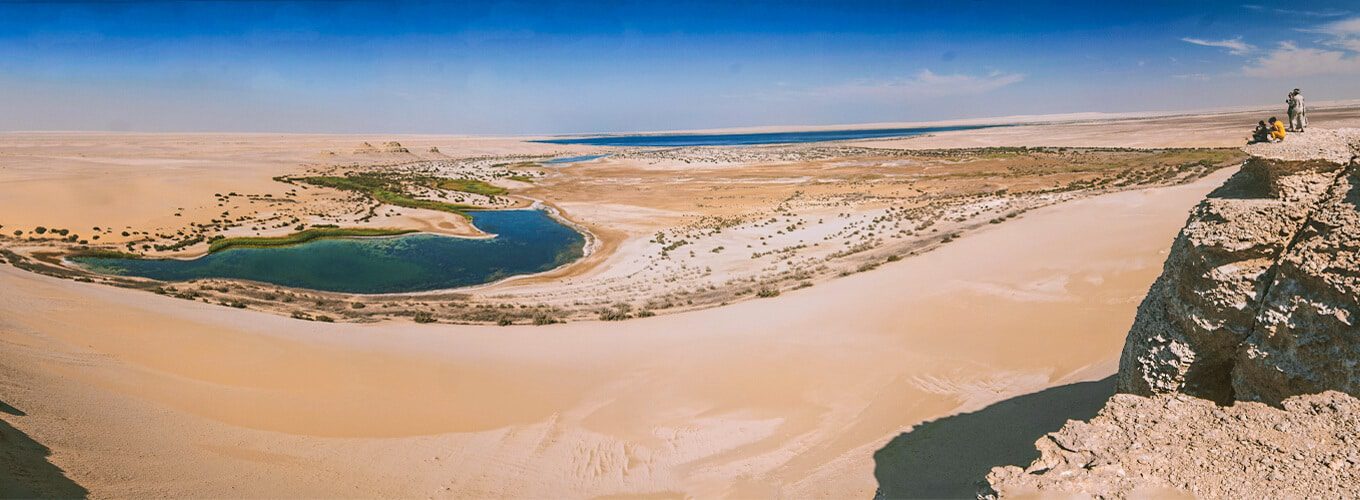 Don't miss
 Wadi Hitan — Valley of the Whales
A UNESCO World Heritage site holding the fossil skeletons of early whales that still had legs — lying where they died, in sand.
Read the guide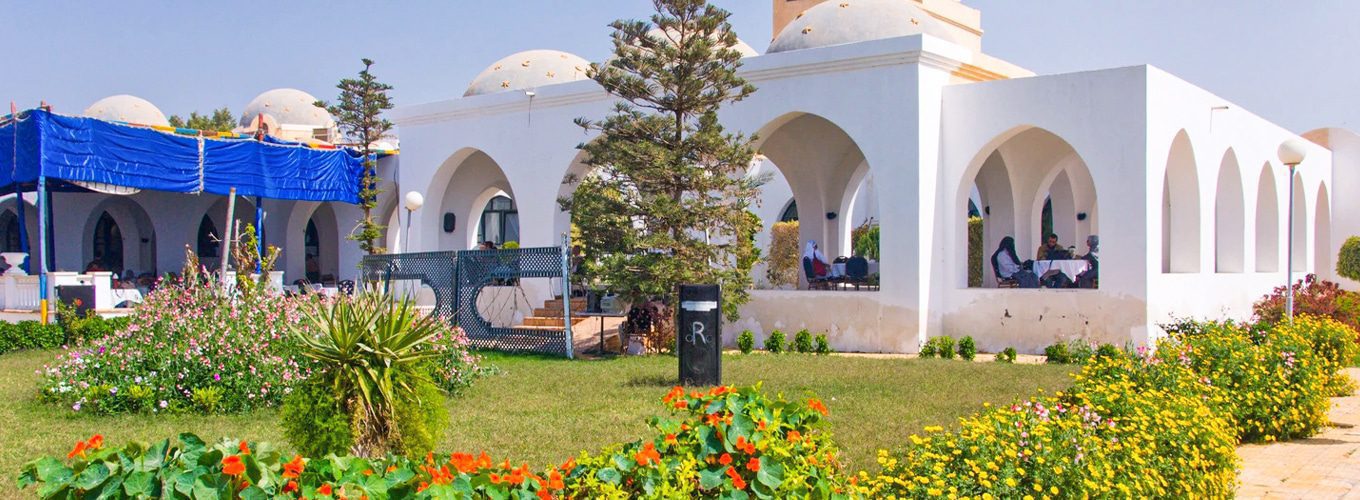
Tunis Village
A pottery village above the lake that became an artists' colony. Good lunch, good ceramics, and the nicest place to stay in Fayoum.
Read the guideBahariya & the White Desert
≈370 km from Cairo 2–3 daysThe classic Egyptian desert trip, and the one almost everyone means by "safari". You drive out to Bahariya, then on into the Black and White Deserts, and camp under the chalk formations.
 Don't miss
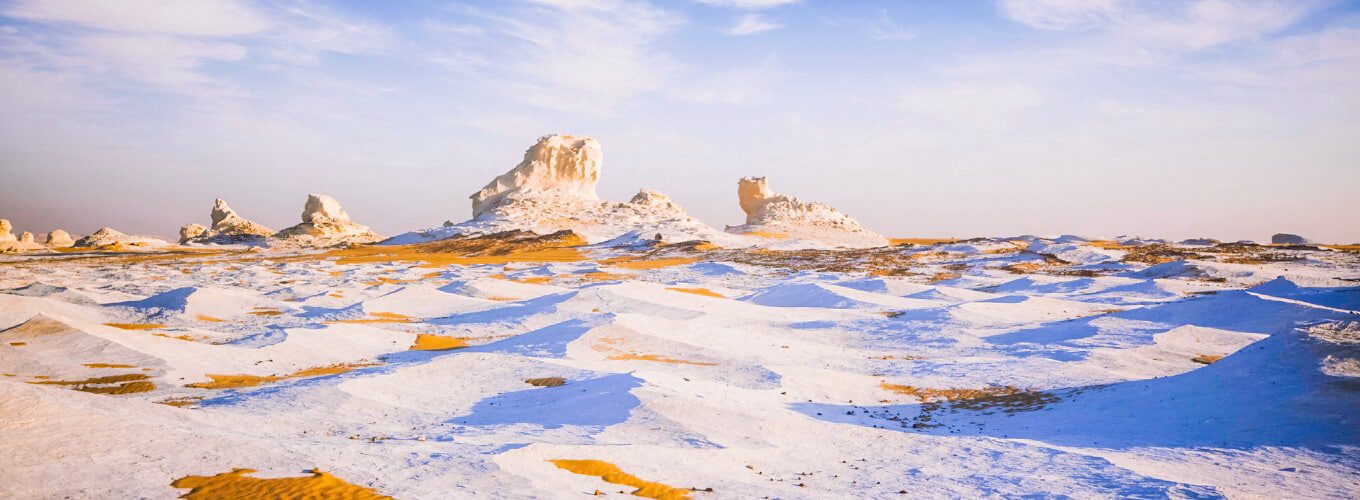
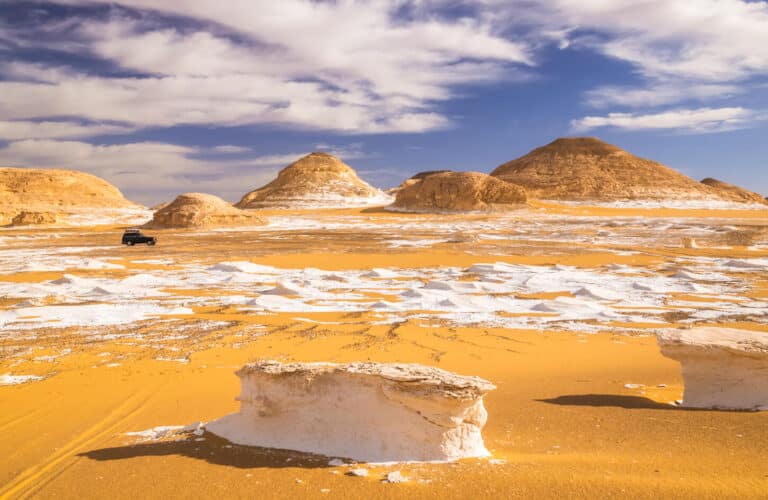
 White Desert National Park
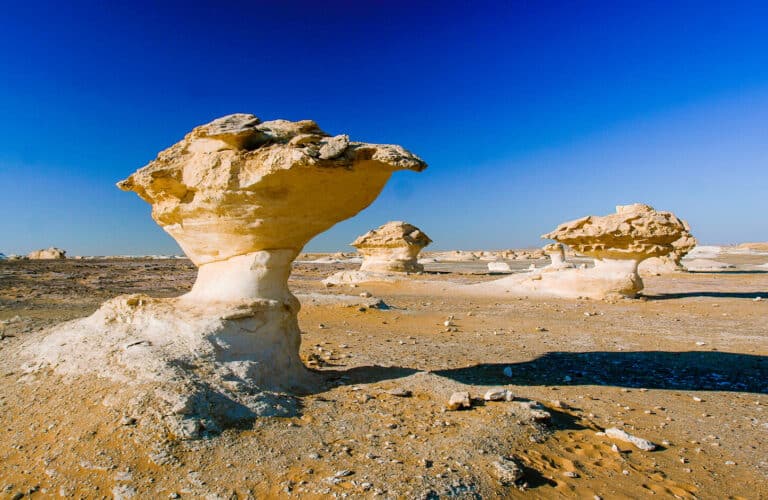
Wind-carved chalk towers standing out of white sand — mushrooms, chickens, whole cities of them. Camping here is the point of the trip.
Read the guide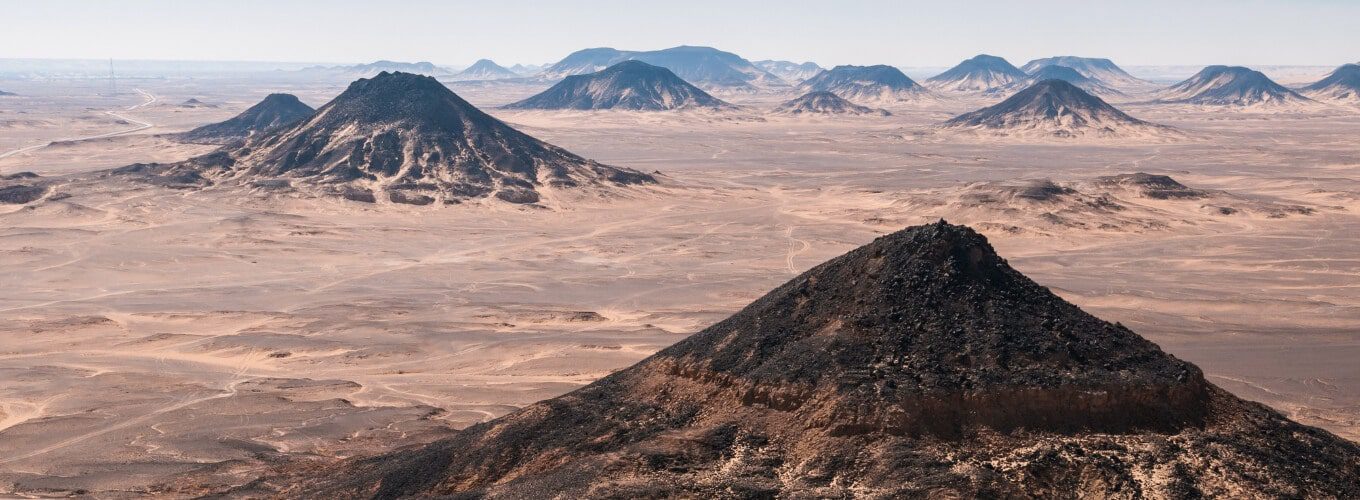
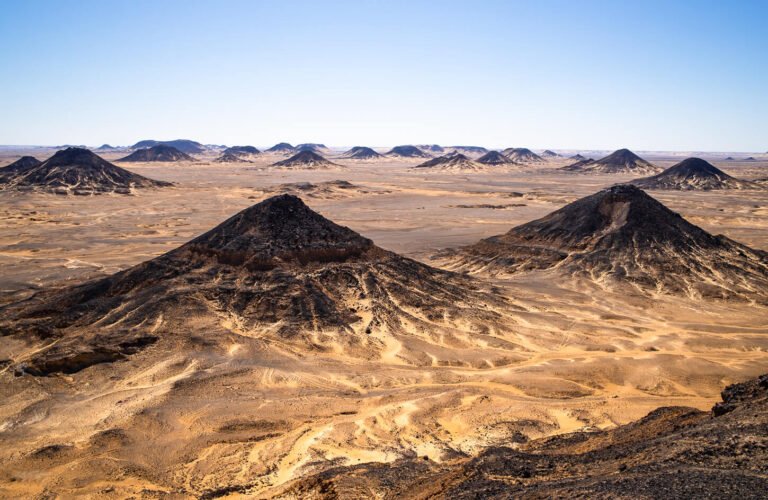
Black Desert
Volcanic hills capped in black dolerite, on the road between Bahariya and Farafra. You climb one for the view and move on.
Read the guide
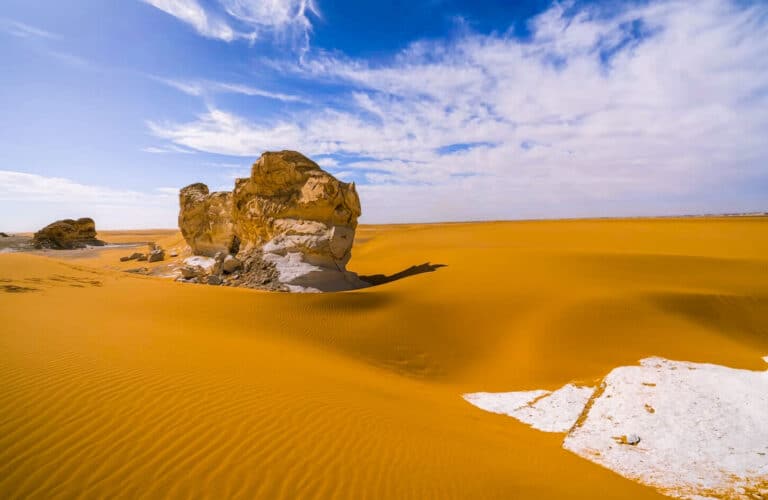
Valley of Agabat
The strangest stretch of the White Desert — chalk cliffs above golden dunes, best in the last hour of light.
Read the guide
Bahariya Oasis
Palm groves, springs and the town of Bawiti. Where every White Desert trip starts and where the 4x4s are.
Read the guide
Golden Mummies Museum
Gilded Greco-Roman mummies found in the 1990s in a cemetery holding thousands more, still largely unexcavated.
Read the guide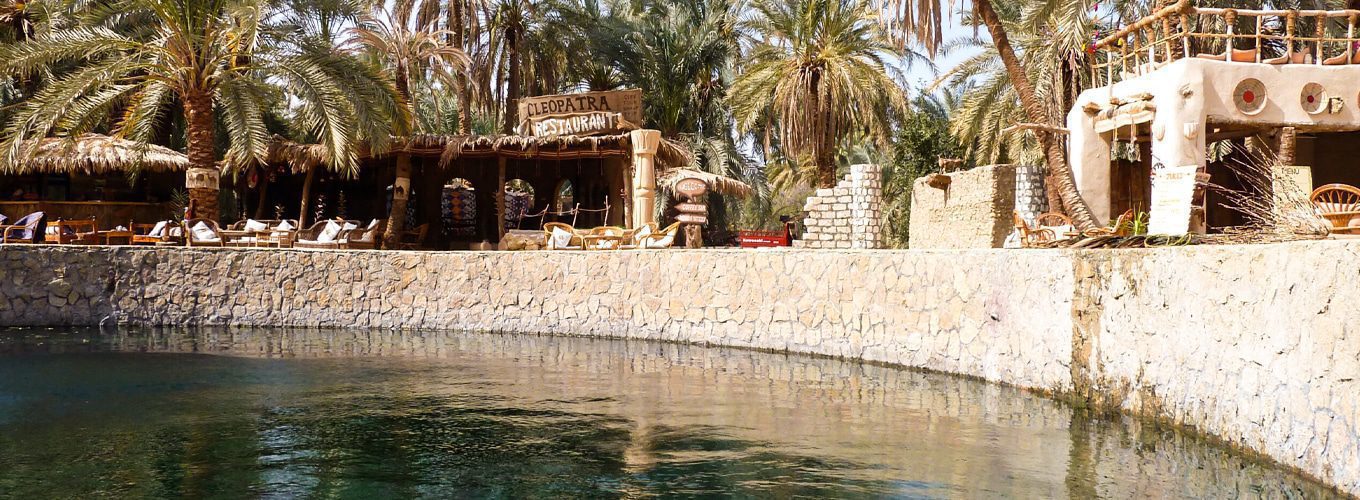
Hot Spring at Bahariya
A hot sulphur spring in the palms — the standard end to a day in the sand, usually after dark.
Read the guide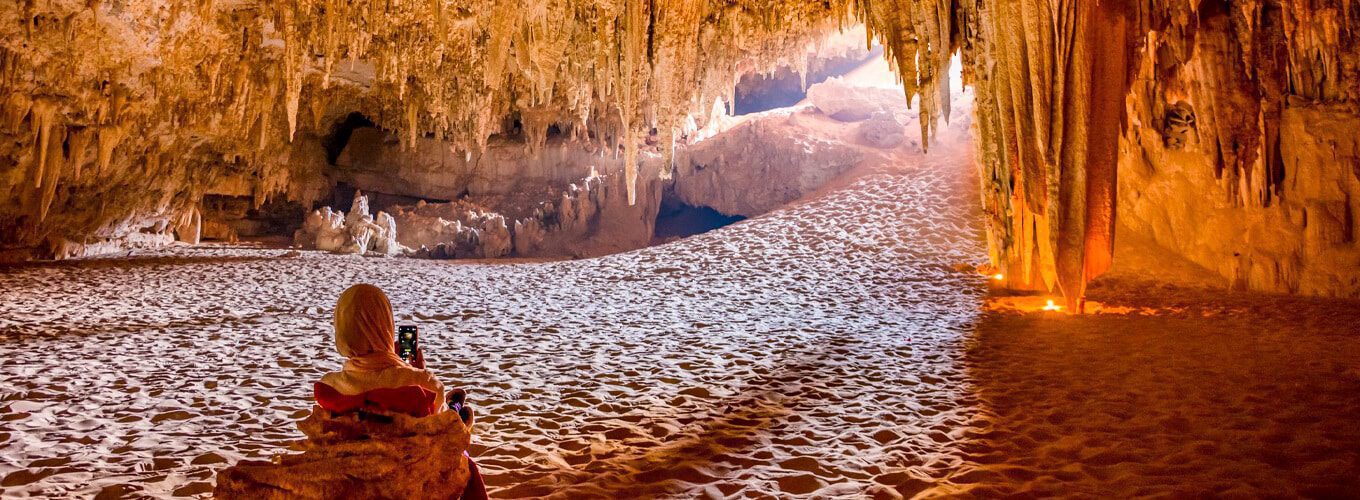
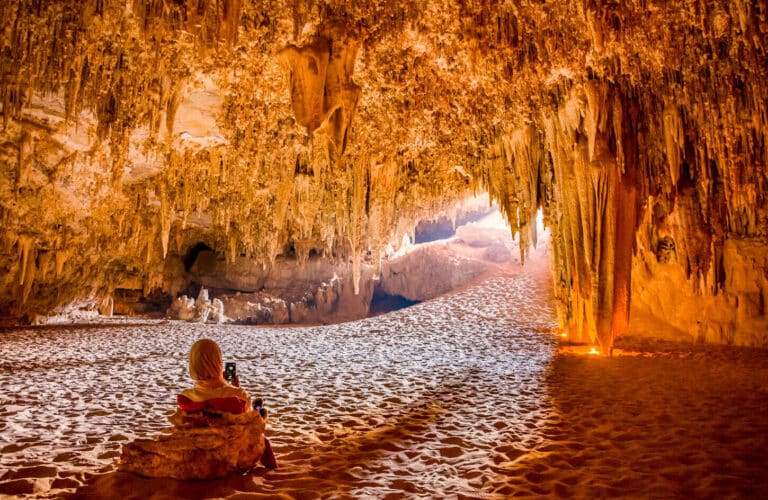
Djara Cave
A limestone cave of stalactites in the middle of open desert, with prehistoric rock art at the entrance. Needs a 4x4 and a detour.
Read the guide
Farafra Oasis
The smallest and quietest of the oases, on the far side of the White Desert. Springs, a mud-brick town and very few visitors.
Read the guideDakhla & Kharga
≈600–800 km, the long loop 5 daysThe far end of the Western Desert circuit, and where the oases stop being scenery and start being history — Roman temples, Christian necropolises and medieval mud-brick towns.
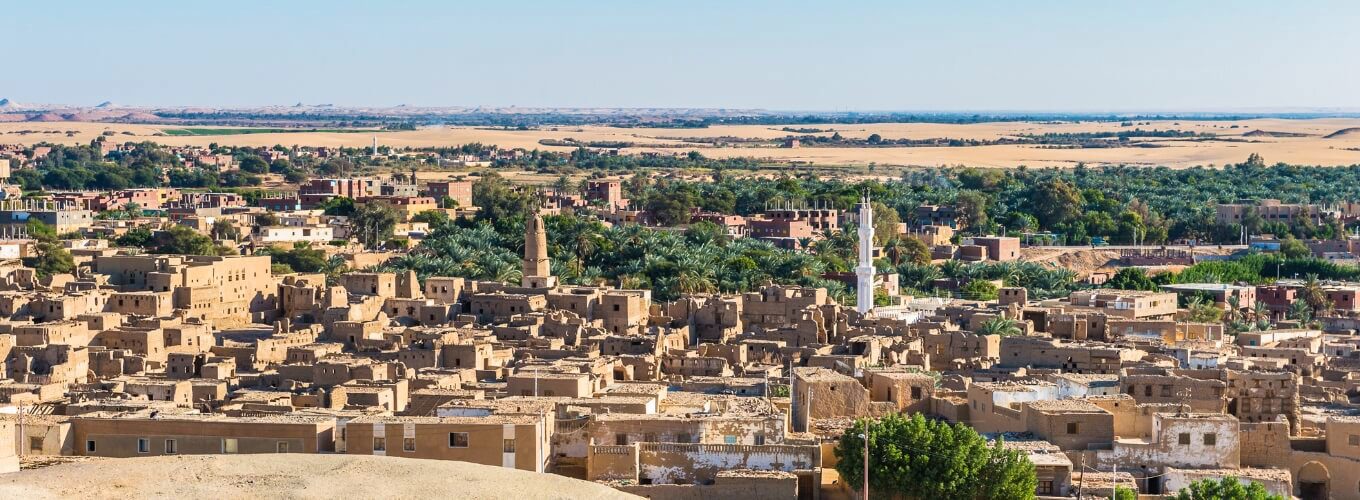
Dakhla Oasis
Pink cliffs, palm groves and the medieval mud-brick town of Al-Qasr, which is still standing and still walkable.
Read the guide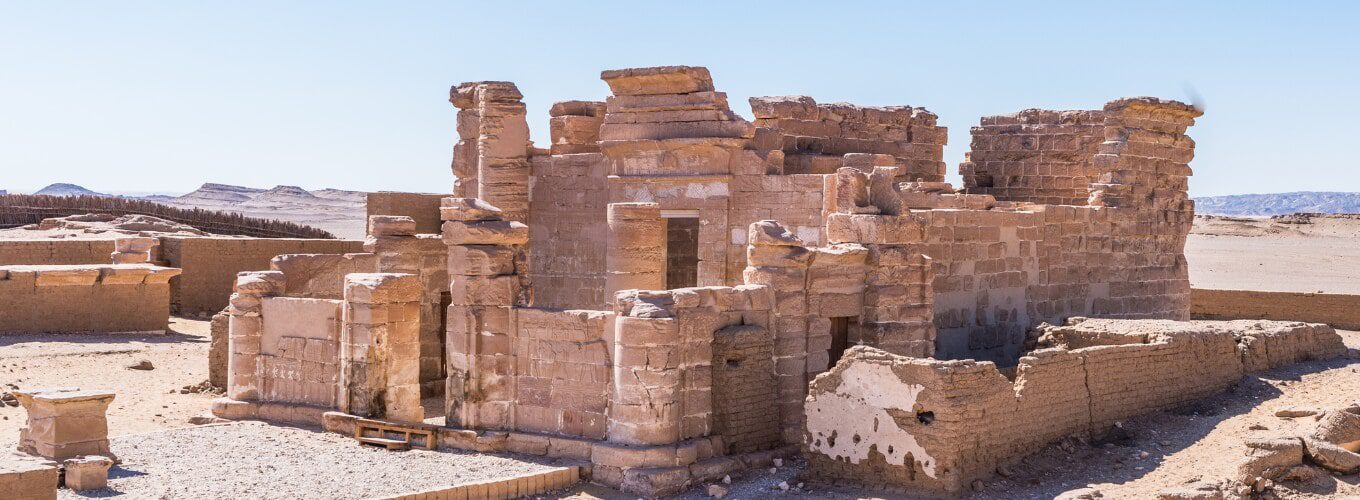
Deir El-Hagar Roman Temple
A sandstone temple to the Theban triad, built under Nero and Vespasian and dug back out of the dunes.
Read the guide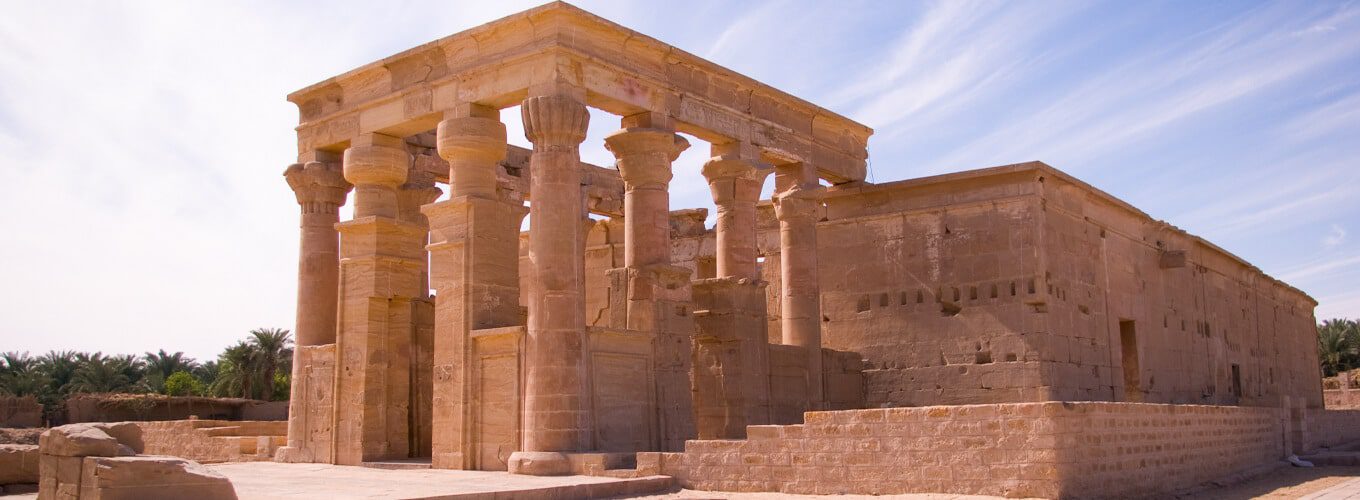
Kharga Oasis
The largest oasis and the most modern town out here, with the Persian-era Temple of Hibis on its edge.
Read the guide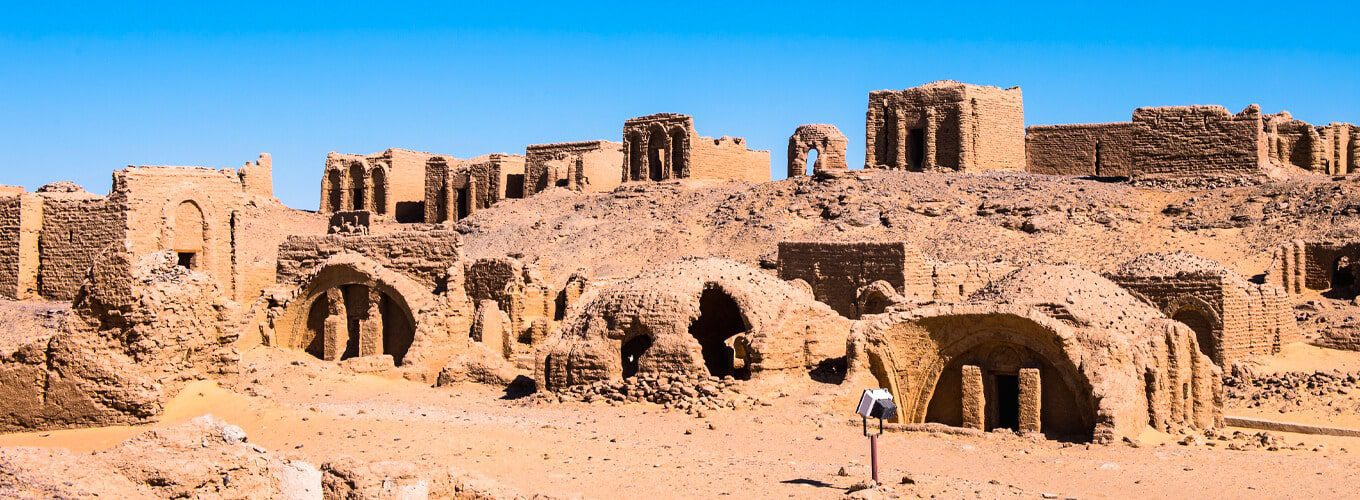
Necropolis of al-Bagawat
One of the oldest Christian cemeteries anywhere — hundreds of mud-brick chapels, some with painted biblical ceilings.
Read the guideSiwa
≈750 km from Cairo 3–4 days, separate A separate trip — not part of the oasis circuitNot on the same trip as the others. Siwa sits out near the Libyan border and is reached along the north coast through Alexandria and Marsa Matruh — a different road, a different language and its own journey.
 Don't miss
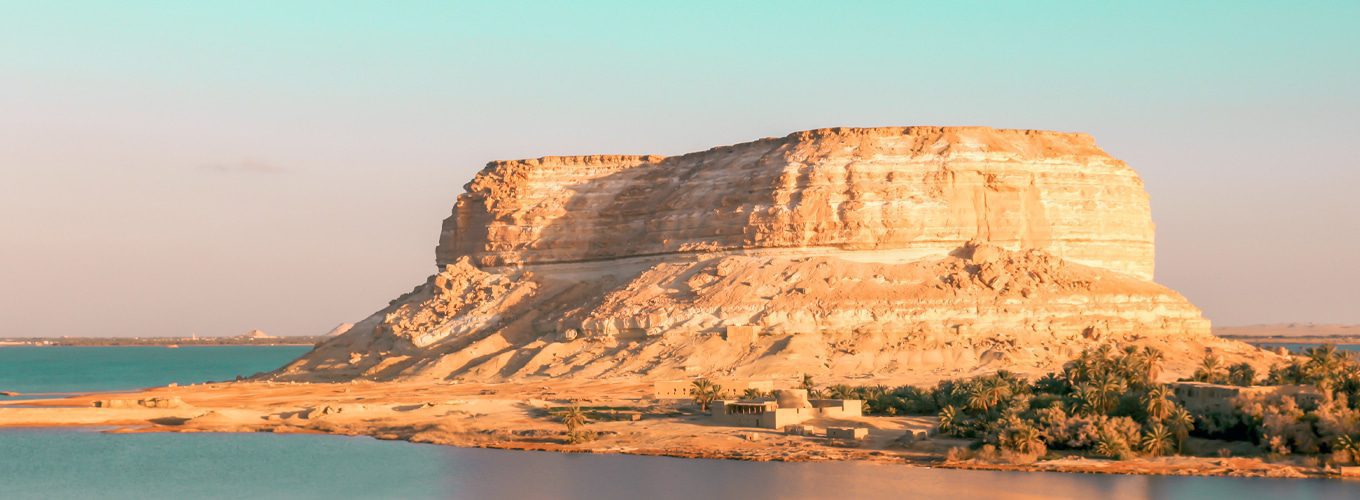
 Siwa Oasis
Berber-speaking, olive-and-date growing, and the most distinct place in Egypt. Alexander came here to consult the oracle of Amun.
Read the guide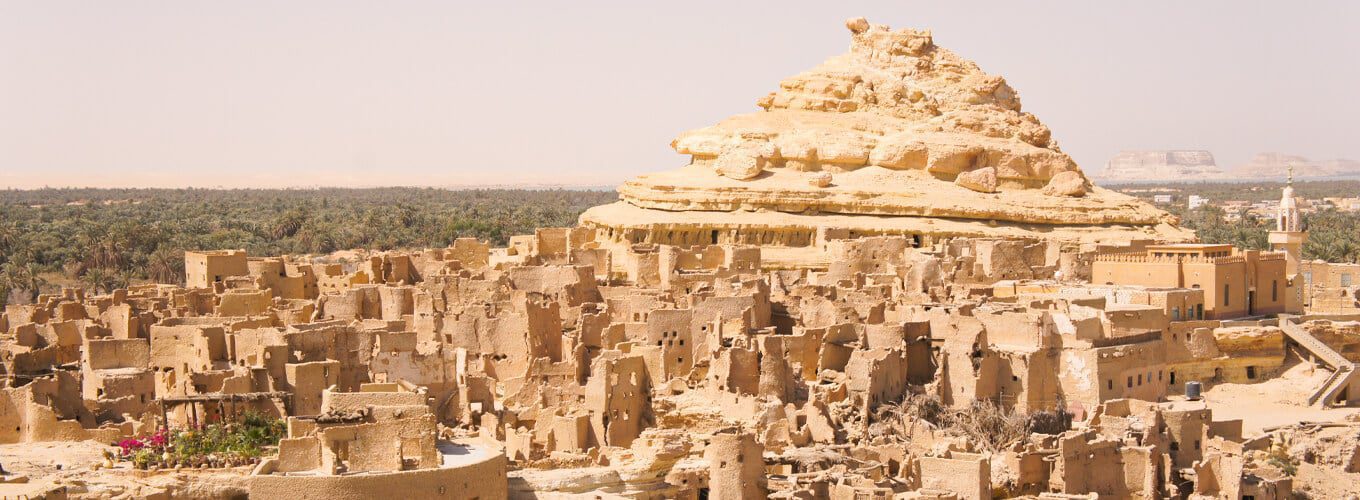
Shali Fortress
The old town, built from salt-and-mud kershef and half melted by three days of rain in 1926. You climb it at sunset.
Read the guide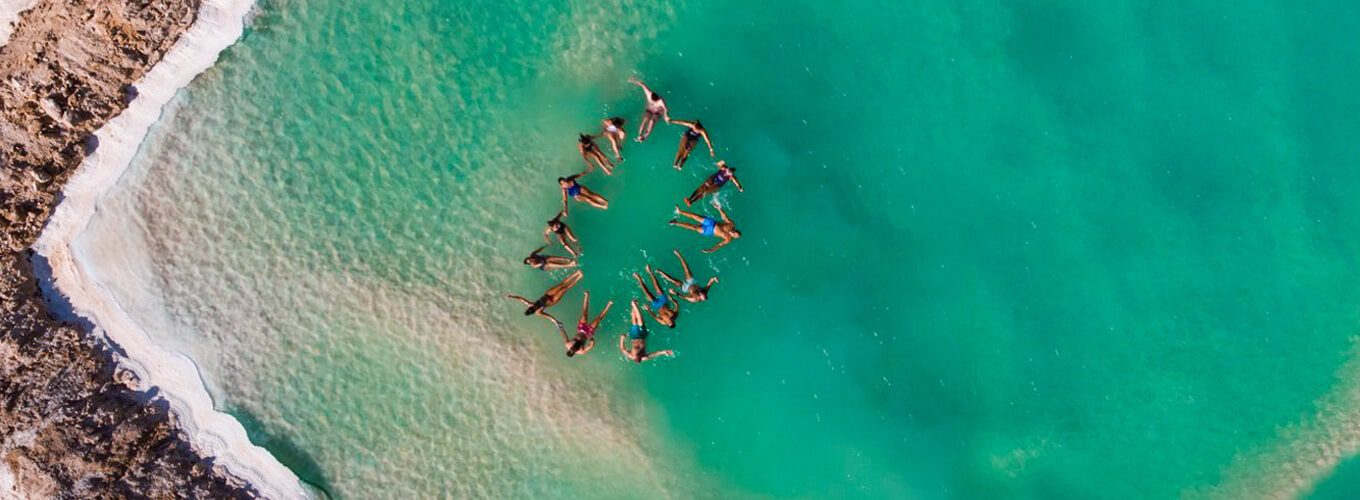
Salt Lakes
Turquoise pools cut into white salt crust, so dense you float without trying. The other reason people come to Siwa.
Read the guideDesert and oasis tours
All private, all with a 4x4 and a driver who knows the routes. Prices per person, with transport, camping equipment, meals in the desert and permits included.
Cairo · Fayoum
Over Day Tour to Fayoum from Cairo
5.0 5 reviews
- Wadi El Rayan waterfalls & lakes
- Lake Qarun + Hawara pyramid
- Private car, guide & lunch included
Cairo · Bahariya · White Desert
Overnight Trip to Bahariya Oasis from Cairo
5.0 6 reviews
- Black Desert & Crystal Mountain
- Golden Mummies & Agabat Valley
- 1 night in Bahariya + all meals
Cairo · Bahariya · White Desert
2 Days Safari Trip to Bahariya Oasis
5.0 20 reviews
- White Desert & Crystal Mountain
- Golden Mummies & Bahariya tombs
- 1 night in Bahariya + all meals
Cairo · Bahariya · Black Desert
3 Days Safari Trip at Bahariya Oasis
5.0 18 reviews
- Black Desert & Golden Mummies Museum
- Hot spring + the White Desert by night
- 2 nights in Bahariya + all meals
Bahariya · Black Desert · Djara Cave
4 Days Safari including Djara Cave
5.0 19 reviews
- Djara Cave rock art + Black Desert
- Agabat Valley & Magic Spring
- 3 nights in Bahariya + all meals
Bahariya · Farafra · Dakhla · Kharga
5 Days Oasis Circle Tour from Cairo
5.0 19 reviews
- Four Western Desert oases
- White Desert & Magic Spring
- Bagawat necropolis in Kharga
Cairo · Luxor · Aswan · Bahariya
12 Day Cairo, Nile Cruise and Bahariya Oasis
5.0 14 reviews
- 4-night Nile cruise + Abu Simbel
- Bahariya Oasis & the White Desert
- Pyramids, Saqqara & Egyptian Museum
What desert travel in Egypt actually involves
You need a 4x4 and a guide
Everything past the tarmac at Bahariya is soft sand, and the White Desert has no signage, no phone signal and no landmarks a visitor can navigate by. Desert travel here is done in a convoy of 4x4s with a driver who knows it. This is not a place to self-drive.
Permits
Parts of the Western Desert require permits and some areas near the Libyan border are closed to visitors. Anything we run has the paperwork handled in advance — if you are arranging a trip independently, confirm the current position before you commit.
Camping
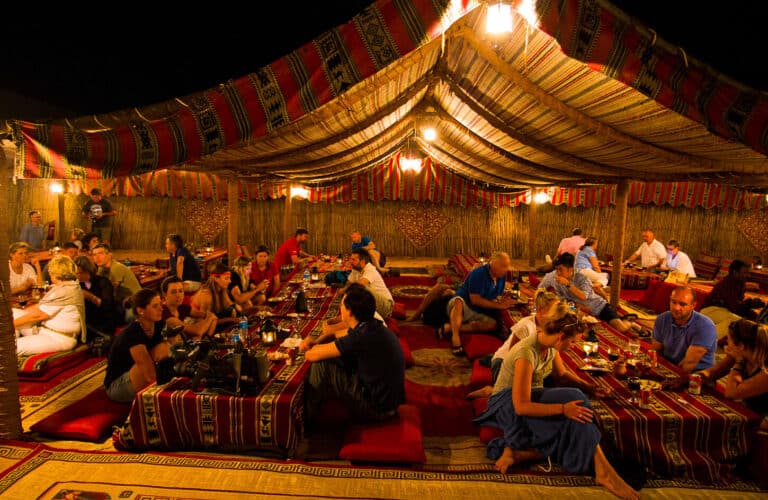
A White Desert night is a proper camp — mats, blankets and a fire, cooked by your driver, with no facilities. That is the whole appeal. Nights get genuinely cold from November to February, colder than people expect, so bring layers.
When to go
October to April. Daytime in the Western Desert passes 40 °C from May to September and there is no shade anywhere. Winter days are perfect and winter nights are near freezing — the two facts belong together.
Siwa is its own journey
Do not try to combine Siwa with Bahariya. They are on different roads with no practical route between them for a visitor — Siwa is reached along the coast via Alexandria and Marsa Matruh, roughly 750 km from Cairo. Give it three or four days of its own.
What to bring
More water than you think, sun cover, a head torch, warm layers for the night and something to keep sand out of a camera. Sand gets into everything on a desert trip, and there is nowhere to buy anything once you leave Bawiti.
Adding the desert to an Egypt trip?
Tell Maro how many days you have spare and we will tell you whether the White Desert fits, whether Siwa is worth the road, and what has to come out of the itinerary to make room.
Egypt's oases and deserts — your questions answered
How many oases are there in Egypt?
Five main ones in the Western Desert: Fayoum, Bahariya, Farafra, Dakhla and Kharga, which together form the circuit people mean by "the oases". Siwa is a sixth but sits far to the north-west near the Libyan border, on a completely different road, and is always visited as its own trip. Fayoum is really a depression fed from the Nile rather than a true desert oasis, which is why it is close enough to Cairo for a day trip.
How do you get to the White Desert?
Through Bahariya Oasis, roughly 370 km from Cairo — four to five hours by road. You transfer to a 4x4 at Bawiti and drive on into the Black Desert and then the White Desert, camping among the chalk formations. There is no way to do it as a day trip from Cairo and no realistic way to do it without a driver: there is no signage, no phone signal and nothing to navigate by.
Can you visit Siwa and the White Desert on the same trip?
Not practically. Siwa is about 750 km from Cairo along the north coast through Alexandria and Marsa Matruh; Bahariya and the White Desert are 370 km due south-west on a different road. There is a desert track between them but it needs permits, a convoy and days. Treat Siwa as its own three or four-day journey and the White Desert as a separate two or three-day one.
Is Wadi Hitan worth visiting?
Yes, and it is the most underrated site within reach of Cairo. Wadi Hitan — the Valley of the Whales — is a UNESCO World Heritage site in Fayoum holding the fossil skeletons of early whales that still had hind legs, lying in the sand where they died around 40 million years ago. It is roughly a two-hour drive from Cairo and fits into the same day as Lake Qarun and the waterfalls.
When is the best time for a desert safari in Egypt?
October to April, without exception. The Western Desert regularly passes 40 °C between May and September with no shade of any kind, which makes both the driving and the camping unpleasant and, in the worst of it, unsafe. In winter the days are perfect and the nights drop close to freezing, so a winter trip means proper warm layers rather than a light jacket.
How many days do you need for the Egyptian desert?
Two days is the minimum for the White Desert — out to Bahariya, camp, and back. Three gives you the oasis itself as well as the sand. Five is what the full circuit takes if you want Dakhla and Kharga, which is where the Roman temples and the Christian necropolis are. Fayoum on its own is a single long day from Cairo.
What is the Black Desert?
A stretch of volcanic hills between Bahariya and Farafra, capped with a layer of black dolerite that has weathered into dark gravel over orange sand. It is a stop rather than a destination — you climb one of the cones for the view over the plain, take twenty minutes, and drive on to the White Desert, which is the reason you came.
Is it safe to travel in the Western Desert?
On the standard routes, with an operator, yes — Bahariya, the White Desert, Farafra, Dakhla, Kharga and Siwa are visited regularly and the logistics are well established. Parts of the desert near the Libyan border are restricted and some areas require permits, which is the main reason to travel with someone who arranges them. Independent self-driving in this region is not something we would recommend to anyone.